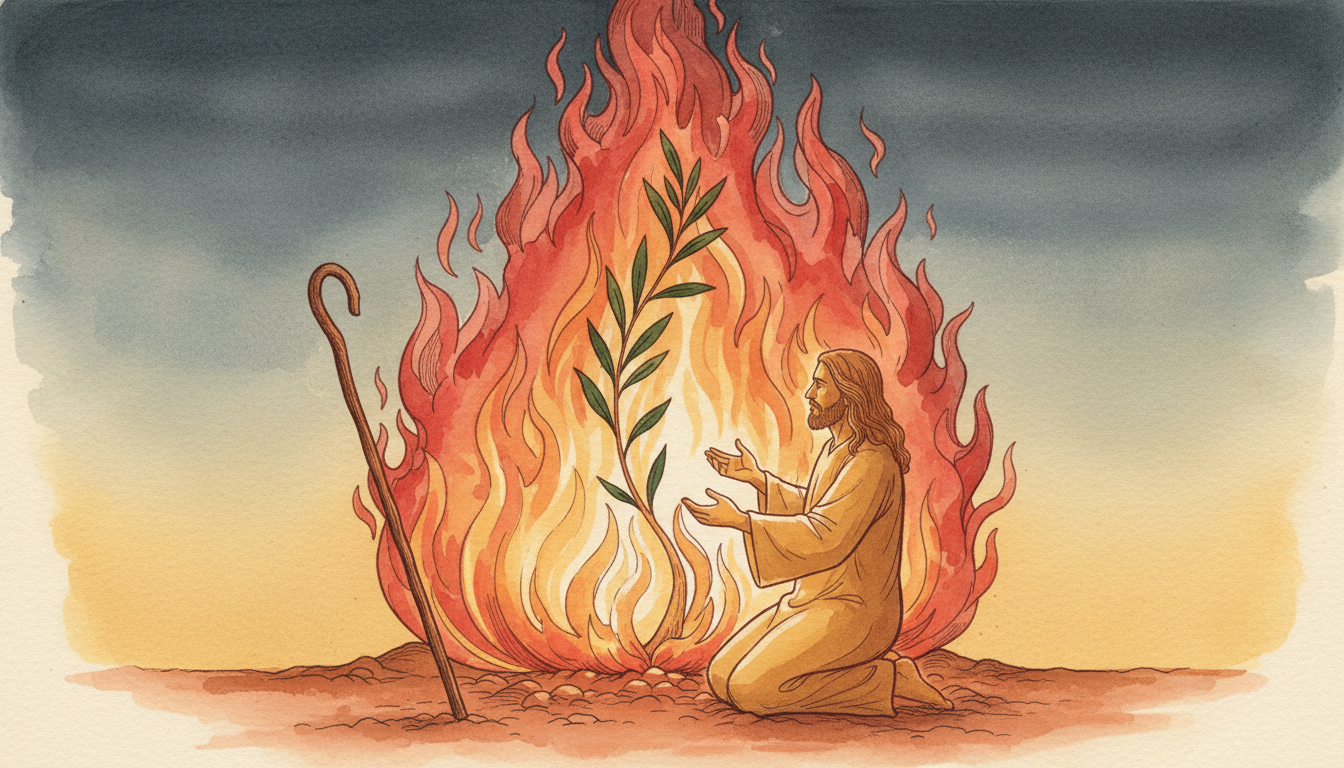
What Does the Bible Reveal About Anger as a Relational Response?
A five-chapter biblical exploration of anger as neither inherently sinful nor a mere emotion to suppress, but a morally complex relational response. This course traces how Scripture distinguishes between destructive and righteous anger, reveals anger and love coexisting in God's character, and shows how Christ's incarnation reframes human anger within redemptive justice. Learners will discover that the biblical text on anger is far richer than common tradition suggests—anger itself is morally neutral; the object, motive, and expression determine its ethical weight.
What you'll study
God's Anger as the Baseline: Divine Justice and Slow Wrath
Exodus 34:6; Nahum 1:2-3; Romans 12:19
The Destructive vs. Righteous Anger Distinction in Hebrew Scripture
Psalm 37:8; Proverbs 14:29, 15:1, 29:22; 1 John 3:15
Jesus and Righteous Anger: The Incarnation Reframes Human Passion
Mark 3:5; Matthew 5:21-26; John 2:13-17
Anger and Love Coexisting: Divine Mercy Within Divine Wrath
Hosea 11:8; Jonah 4:1-4; James 1:19-20
Reframing Human Anger in Light of Redemption: From Vengeance to Restoration
Ephesians 4:26-27; Colossians 3:8; 1 Thessalonians 5:14; Romans 12:19
Chapter 1 · Free to read
God's Anger as the Baseline: Divine Justice and Slow Wrath
Exodus 34:6; Nahum 1:2-3; Romans 12:19
The Text
Exodus 34:6 — 'Then the LORD passed in front of Moses and called out: "The LORD, the LORD God, is compassionate and gracious, slow to anger, abounding in loving devotion and faithfulness, maintaining loving devotion to a thousand generations, forgiving iniquity, transgression, and sin. Yet He will by no means leave the guilty unpunished; He will visit the iniquity of the fathers on their children and grandchildren to the third and fourth generations." Nahum 1:2-3 — 'The LORD is a jealous and avenging God; the LORD takes vengeance and is filled with wrath. The LORD takes vengeance on His foes and reserves wrath for His enemies. The LORD is slow to anger and great in power; the LORD will not leave the guilty unpunished.' Romans 12:19 — 'Do not take revenge, beloved, but leave room for God's wrath, for it is written: "It is mine to avenge; I will repay," says the Lord.'
Exodus 34:6; Nahum 1:2-3; Romans 12:19 (These three passages form a canonical chain on God's anger and human response. Exodus 34:6 establishes God's foundational character trait: He is 'slow to anger' (Hebrew: אַךְ־קְצַר־אַף, 'akh qetsar-'aph, literally 'slow of nose/anger'). This is not weakness but the deliberate restraint of justified wrath. Nahum 1:2-3 echoes Exodus 34 almost verbatim, affirming that God's slowness to anger coexists with His certain justice. Romans 12:19 applies this truth: humans must NOT take vengeance because God's wrath is His prerogative. Believers are called to trust in God's justice, not to execute it themselves.)
Key Terms
- אַף (aph) · 'aph
- Literally 'nose' or 'nostril,' but idiomatically 'anger' or 'wrath.' The metaphor assumes anger is a heating sensation that flares the nostrils—a visceral, embodied emotion.
- חֶסֶד (chesed) · chesed
- Often translated 'loving-kindness,' 'mercy,' or 'loyal love.' It denotes the steadfast, covenantal commitment that one party makes to another—especially God's unwavering commitment to His people despite their failure.
- נָשָׂא עָוֹן (nasa' awon) · nasa' awon
- Literally 'to lift' or 'bear' iniquity. It means to forgive by removing the burden of guilt. Not to overlook sin, but to take it away.
- μακροθυμέω (makrothymeō) · makrothymeō
- Greek: literally 'long-tempered.' It denotes patience, forbearance, the quality of being slow to anger. Romans 12:19 evokes this virtue—believers are to embody God's own patience by refusing to avenge themselves.
Historical Foundation
From the wilderness covenant renewal (c. 1445 BCE, traditional chronology) through Second Temple Judaism (539-70 CE) to first-century apostolic Christianity
Israel had just committed cosmic apostasy: while Moses received the law on Mount Sinai, the people fashioned an idol and worshiped it below (Exodus 32). God's initial response was wrath—He threatened to consume them and start over with Moses' line (Exodus 32:10). But Moses interceded. By Exodus 34, the covenant is being renewed, not terminated. This moment is not God softening His stance; it is God revealing the deeper structure of His justice: His wrath is real and terrible, but it operates within a framework of mercy, forbearance, and redemptive purpose. God's anger is not hair-trigger or vengeful; it is the measured response of a covenant-keeping God whose patience is almost beyond human comprehension. This becomes the lens through which all subsequent Scripture interprets divine wrath—and ultimately, human anger, which is called to reflect God's own character (Ephesians 4:26-27 echoes the Psalmic refrain that God is 'slow to anger'; Proverbs 14:29, 15:18, 16:32 make slowness to anger a sign of wisdom, not weakness).
Cultural World
The ancient Near East (ANE) was saturated with warrior-king theology: gods were depicted as violent, capricious, and quick to rage. The Code of Hammurabi (c. 1754 BCE, Babylonian) reflects a legal culture where justice is retributive and immediate—an eye for an eye, with little room for mercy. The Enuma Elish (Babylonian creation myth, c. 1200 BCE) portrays the god Marduk as achieving power through violent conquest and bloodlust. Against this backdrop, Exodus 34:6 is countercultural. Israel's God announces Himself not as a tyrant who strikes first and asks questions later, but as One whose justice is measured, whose mercy precedes punishment, and whose covenantal loyalty spans 'a thousand generations.' This is an inversion of ANE assumptions about divine character. God is still jealous (Exodus 34:14 uses the term קַנָּא qanna', 'zealous/jealous'), still capable of terrible wrath (Nahum 1:2-3 echoes the language of divine vengeance), but His anger is restrained by His commitment to the covenant. The suzerainty treaty model (well-attested in Hittite treaties from c. 1450-1200 BCE, such as the Hittite-Egyptian treaty between Ramesses II and Hattusili III) provides a framework: a great king establishes a covenant with a vassal, promising protection and blessing if the vassal is loyal, threatening judgment if the vassal rebels. But Exodus 34 adds a crucial element absent from secular treaties: even when the vassal rebels (as Israel did with the golden calf), the king seeks reconciliation, not annihilation. This reflects a redemptive understanding of covenant that transcends typical ANE political pragmatism.
What the Evidence Shows
God's anger, as revealed in Exodus 34:6, is not a defect or a weakness in His character—it is a structural feature of His justice. The phrase 'slow to anger' (Hebrew אַךְ־קְצַר־אַף 'akh qetsar-'aph, literally 'short of nose/anger') announces that God's wrath does not operate on a hair-trigger. Instead, it is deliberate, measured, and rooted in covenant faithfulness. This stands in sharp contrast to ANE warrior-god theology, where divine anger was violent and arbitrary. When Israel broke the covenant at Sinai by fashioning the golden calf (Exodus 32), God's initial response was wrath—He threatened to consume the people (Exodus 32:10). But Moses interceded, and God's covenant commitment overrode His immediate judgment. By Exodus 34, the law is renewed, not revoked. This pattern—wrath followed by mercy within a covenantal framework—becomes the template for all subsequent biblical theology. The prophetic witness reinforces this. Nahum 1:2-3, written centuries later during Assyrian militarism (c. 650 BCE), echoes Exodus 34 almost verbatim: 'The LORD is slow to anger and great in power; the LORD will not leave the guilty unpunished.' Nahum uses this doctrine to assure Judah that although Assyria seems invincible, God's delayed wrath against evil empires is certain. Slowness does not mean leniency; it means that judgment, when it comes, will be both terrible and just. By the New Testament era, this doctrine had become foundational to apostolic ethics. Romans 12:19 directly applies Exodus 34's character to human behavior: 'Do not take revenge, beloved, but leave room for God's wrath.' Paul quotes Deuteronomy 32:35, which itself echoes Exodus 34. The logic is straightforward: if God alone has the right to wrath, and if God's wrath is slow, measured, and just, then humans must surrender their impulse to avenge themselves immediately. This is not passivity; it is a form of trust. To 'leave room for God's wrath' is to believe that God will execute justice more thoroughly and truly than any human agent ever could. The progression is thus: (1) God's character is defined by slowness to anger within covenant (Exodus 34); (2) This slowness is compatible with certain justice (Nahum 1:2-3); (3) Human anger must mirror this divine model by exercising restraint and trusting God's justice (Romans 12:19, and implicitly throughout the Wisdom literature—Proverbs 14:29, 15:18, 16:32, where 'slow to anger' is the mark of wisdom and strength).
Scholarly Witness
Henry emphasizes that the renewal of the tables after the golden calf breach shows that 'when peace was made all must be begun anew.' The covenant was not annulled but renewed, signifying that even under the gospel, the moral law binds believers. The renewal also demonstrates that God's reconciliation is evidenced by the writing of the law on the heart—a theme that connects Exodus 34 to the new covenant in Jeremiah 31:33 and Hebrews 8:10.
Gill notes that Moses' breaking of the first tables 'was not the effect of passion...but of zeal for the glory of God.' He further observes that the renewal—with Moses hewing the stones while God provides the writing—shows the distinction between the law itself (which is God's) and the human role in mediating and preserving it. This anticipates the role of prophets and apostles in inscribing the law on human hearts.
JFB argues that the entire transaction was 'ordered so as to impress the people with an awful sense of the holiness of God.' The solemnity of the renewed covenant—with Moses standing alone on the mount, with no one else nearby, not even flocks or herds—underscores that the law is not a casual contractual matter but a sacred, binding obligation. This frames Exodus 34 as a moment of cosmic significance.
Von Rad argues that Exodus 34:6 represents a theological climax in the Pentateuch: God's self-declaration of mercy is not a retreat from justice but a revelation of the full structure of His covenantal character. The phrase 'slow to anger' anchors God's relationship with Israel in a pattern of patience and redemptive purpose that transcends tribal kinship morality.
Heiser highlights that God's 'jealousy' (qanna') in Exodus 34:14 is not petulant possessiveness but zealous commitment to the covenant. God's anger against idolatry flows from His covenantal relationship with Israel. This reframes 'slow to anger' not as leniency but as the patience of a covenant-keeper who will not lightly break His commitment, even when Israel is faithless. Heiser emphasizes that understanding ANE divine council theology enriches the interpretation of God's wrath—it is exercised within a framework of divine governance, not arbitrary emotion.
Davis emphasizes that Exodus 34:6 must be read in its narrative context: Israel has just sinned catastrophically, yet God is proclaiming His mercy. This is not generalized theology but concrete pastoral theology for a people in crisis. God's slowness to anger is a lifeline, not an abstract doctrine. This reading recovers the existential force of the text—it is meant to transform a despairing, guilty people into a reconciled community.
Discovery Questions
1.When God proclaims His character in Exodus 34:6, He uses a specific phrase to describe His anger: 'slow to anger.' But what does 'slow' actually mean in the context of God's justice? Does it mean God is reluctant to judge, or does it mean something else?
'Slow to anger' is not mercy that overlooks sin—it is justice that is deliberate and measured. God WILL judge, but He does so within a covenantal framework that allows for repentance and redemption. The slowness refers to the TIMING and RESTRAINT of His wrath, not its absence. This is revolutionary in its cultural context, where ANE gods were capricious and quick to destroy. God's slowness is a sign of His strength and His commitment to His people's transformation, not weakness.
2.Exodus 34:6 uses the phrase 'abounding in loving devotion and faithfulness.' In the very next verse, God says He will 'visit the iniquity of the fathers on their children and grandchildren to the third and fourth generations.' How do these two statements—mercy and generational judgment—belong together in God's character? Aren't they contradictory?
This is not a contradiction; it is a reflection of corporate liability in covenant theology. God's mercy toward the penitent coexists with accountability for systemic, generational covenant-breaking. The 'visitation' of iniquity is not petty revenge but the natural consequence of a family or nation that inherits and perpetuates rebellion. However, the same passage promises 'loving devotion to a thousand generations' for those who keep covenant. God's mercy vastly outweighs His judgment—mercy extends to a thousand generations; judgment extends to four. This ratio reveals that God's character is fundamentally oriented toward redemption, not condemnation.
3.Nahum 1:2-3 echoes Exodus 34:6 almost word-for-word ('slow to anger,' 'will not leave the guilty unpunished'). What is Nahum's message to Judah by invoking this foundational declaration about God's character? Why would a prophet facing Assyrian military dominance need to remind his people of God's slowness to anger?
Nahum uses the Exodus 34 doctrine to reassure Judah that although Assyria seems invincible, God's apparent delay in judgment does not mean indifference. God is slow to anger—but His slowness is purposeful. He is gathering evidence, allowing time for repentance, and building a case. When His wrath finally comes, it will be absolutely certain and overwhelmingly thorough. Slowness to anger is thus a sign of God's sovereignty, not His weakness. This transforms the Exodus 34 formula from a word of comfort for the guilty into a word of dread for the wicked and reassurance for God's threatened people.
4.Romans 12:19 commands believers: 'Do not take revenge, beloved, but leave room for God's wrath.' Why would Paul frame the prohibition on personal vengeance in terms of 'leaving room for God's wrath'? What does this reveal about the connection between God's anger and human ethics?
Paul assumes that God's slowness to anger is compatible with His absolute certainty to judge. Humans, by contrast, cannot see the full picture—they do not know whether they have all the facts, whether the accused is truly guilty, or whether circumstances merit mercy. By 'leaving room for God's wrath,' believers surrender the role of judge to the One who is omniscient and infallible. This is not passivity; it is active trust. It reflects the structure of Exodus 34: God's anger is real and terrible, but it is exercised by One whose justice is perfect and whose mercy is infinite. When believers refrain from personal vengeance, they are embodying God's own character—they are becoming 'slow to anger' because they trust in God's speed and precision in bringing justice. The Proverbs wisdom tradition reinforces this: 'Slow to anger is better than the mighty' (Proverbs 16:32), because slowness to anger reflects the wisdom of one who trusts in God's justice, not the weakness of one who is afraid to act.
Connected Passages
- Psalm 103:8-10 — This psalm directly applies the Exodus 34 formula to personal prayer: 'The LORD is compassionate and gracious, slow to anger, abounding in loving devotion. He will not always accuse, nor will He harbor His anger forever. He has not dealt with us according to our sins, nor repaid us according to our iniquities.' This shows how Israel's worship tradition internalized the covenant character revealed at Sinai and experienced it as personal comfort.
- Psalm 145:8-9 — Another echo of Exodus 34: 'The LORD is gracious and compassionate, slow to anger and rich in loving devotion. The LORD is good to all; He has compassion on all His works.' Here the doctrine becomes the ground for hope in God's universal goodness—not just toward Israel, but toward all creation.
- Joel 2:13 — During a plague, Joel calls the people to repentance: 'Rend your hearts and not your garments, and return to the LORD your God, for He is gracious and compassionate, slow to anger and abounding in loving devotion, and He relents from sending calamity.' This shows that the Exodus 34 formula became a liturgical anchor for penitential theology—a reminder that even in God's judgment, His mercy is the deeper reality.
- Nehemiah 9:17 — In the post-exile prayer of confession, the people invoke: 'But You are a God of forgiveness, gracious and compassionate, slow to anger, and rich in loving devotion. You did not abandon them.' This demonstrates that by the Persian period, Exodus 34:6 had become the standard formula for appealing to God's mercy when facing the consequences of covenant breach.
- 1 Peter 3:8-9 — Peter applies the slowness-to-anger virtue to inter-believer relationships: 'Finally, all of you be of one mind, sympathetic, loving, compassionate, and humble... do not repay evil with evil or insult with insult, but repay with a blessing instead.' This shows how the Exodus 34 character trait becomes the moral template for Christian community—believers are to embody God's patience and mercy toward one another.
- Ephesians 4:26-27 — Paul quotes Psalm 4:4 and commands: 'Be angry and do not sin; do not let the sun set on your anger, and do not give the devil a foothold.' This shows that anger is not forbidden, but it must be bounded by time and purpose. The believer's anger should mirror God's—just, measured, and redemptive, never petty or prolonged.
- Proverbs 14:29; 15:18; 16:32 — These wisdom sayings establish that 'slow to anger' is the mark of wisdom, discernment, and true strength: 'A patient man has great understanding, but a quick-tempered man exalts folly' (14:29); 'A hot-tempered man stirs up conflict, but a patient man calms a quarrel' (15:18); 'Better a patient man than a warrior, and one who controls his temper than one who takes a city' (16:32). This shows that the Exodus 34 doctrine was not merely theology but practical ethics—slowness to anger was understood as the highest form of strength.
Takeaways
- God's 'slowness to anger' (Exodus 34:6) is not weakness or leniency but the measured, covenantal patience of a God whose justice is certain and whose mercy is infinite. God's wrath is real and terrible, but it operates within a redemptive framework. This stands in sharp contrast to ANE warrior-god theology, which depicted divine anger as capricious and destructive. In recovering this truth, believers discover that God's character is far more profound than cultural stereotypes about divine justice—His slowness is a sign of His sovereignty and His commitment to transformation, not His hesitation or indifference.
- The renewal of the covenant in Exodus 34, after Israel's apostasy with the golden calf, reveals that God's mercy does not erase justice but integrates it. God could have annihilated Israel, but instead He renewed the covenant, writing the law on new tablets (this time prepared by Moses, not God alone). This act foreshadows the new covenant in Jeremiah 31:33 and Hebrews 8:10, where the law is written on human hearts. Even when believers fail, the trajectory is reconciliation, not condemnation—provided they return to covenant faithfulness.
- The Exodus 34 formula ('slow to anger, abounding in loving devotion, forgiving iniquity...yet He will by no means leave the guilty unpunished') became the foundational doctrine for Israelite theology and worship. From the Psalms to the prophets (Nahum 1:2-3) to the apostolic letters (Romans 12:19), Scripture consistently applies this doctrine to both God's character and human ethics. Believers who understand this pattern can trust that God's delays in judgment do not signal weakness but purposeful, redemptive patience. And in personal relationships, believers are called to embody this same character—to be slow to anger because they trust in God's absolute justice.
- The prohibition on personal vengeance in Romans 12:19 flows directly from the Exodus 34 doctrine: 'Do not take revenge, beloved, but leave room for God's wrath.' This 'leaving room' is not passivity but active trust. When believers refrain from personal retribution, they are acknowledging that God's judgment is more thorough, more just, and more truly redemptive than any human anger could be. They are embodying God's own slowness to anger by surrendering the impulse to judge immediately. The Proverbs wisdom tradition affirms this: the person who is 'slow to anger' is not weak but wise, strong, and secure in God's sovereignty.
- Throughout Scripture, 'slowness to anger' is presented not as a doctrinal abstraction but as a lived reality. The Psalms invoke it in prayer (Psalm 103:8), the prophets use it to reassure the threatened (Nahum 1:2-3), penitential prayers ground hope in it (Nehemiah 9:17), and the apostles demand it as the moral baseline for Christian community (1 Peter 3:8-9, Ephesians 4:26-27). This consistency reveals that God's anger is never arbitrary or merely retributive—it is always the measured response of a covenant-keeper whose ultimate purpose is reconciliation, transformation, and the redemption of His people.
Application
Examine your own anger in the light of Exodus 34:6. When you are wronged, do you respond with immediate vengeance (like an ANE warrior-god), or do you pause and 'leave room for God's wrath' (Romans 12:19)? Specifically: (1) Is there a situation in your life where someone has hurt you, and you are holding onto the right to punish them? What would it mean to surrender that right and trust God's justice instead? (2) In your family, workplace, or church, are you known for being 'slow to anger' (Proverbs 16:32), or are you quick-tempered? How might recovering the biblical pattern—where slowness to anger is the mark of wisdom and strength, not weakness—transform your relationships? (3) The Exodus 34 formula emphasizes that God is 'abounding in loving devotion' at the same time that He 'will by no means leave the guilty unpunished.' How do you hold both realities together in your own repentance and forgiveness? When you ask God for mercy, are you also accepting the consequences of your actions, understanding that God's forgiveness does not erase accountability? (4) Finally, if God is slow to anger toward you—patient, redemptive, and committed to your transformation—how should that shape your patience toward others? Where do you need to extend the same 'slowness to anger' that God has extended to you?
Continue the course — 4 more chapters
The Destructive vs. Righteous Anger Distinction in Hebrew Scripture
Psalm 37:8; Proverbs 14:29, 15:1, 29:22; 1 John 3:15
How does the Hebrew Bible distinguish between sinful, destructive anger (חמה, chemah) and responses rooted in justice, and what does wisdom literature reveal about anger's destructive power in human relationships?
Jesus and Righteous Anger: The Incarnation Reframes Human Passion
Mark 3:5; Matthew 5:21-26; John 2:13-17
How does Jesus model anger without sin, and what does His anger at injustice and His teaching on the roots of murder reveal about anger as a response to violation of God's kingdom?
Anger and Love Coexisting: Divine Mercy Within Divine Wrath
Hosea 11:8; Jonah 4:1-4; James 1:19-20
How does Scripture reveal that anger and tender mercy coexist in God's character, and what does this emotional theology teach us about the false Western divide between justice and compassion?
Reframing Human Anger in Light of Redemption: From Vengeance to Restoration
Ephesians 4:26-27; Colossians 3:8; 1 Thessalonians 5:14; Romans 12:19
How does the New Testament apostolic teaching reframe human anger within Christ's redemptive work, moving believers from personal vengeance to trust in God's justice and toward community restoration?
No credit card required
Sources Used
Every insight traces to a named source. 0 AI-generated interpretations.
Related courses
Fasting as Wholehearted Response to God: What the Bible Reveals
A five-chapter course exploring fasting through the primary biblical text as the foundation, progressing from its institution in Torah through its reframing by Jesus and the apostolic church. Each chapter anchors in a key passage, then enriches understanding through historical, cultural, theological, and relational context. Learners will discover that biblical fasting is not self-denial for spiritual gain, but rather an embodied, relational response that aligns the faster with God's justice, mercy, and kingdom purposes—a practice far more profound than inherited tradition often suggests.
5 chapters
What Does Scripture Teach About Money? A Covenantal Vision Beyond Personal Virtue
This six-chapter course recovers the Bible's richest teaching on money as a covenantal and structural force, not merely a tool for individual moral performance. Beginning with the foundational text that distinguishes the love of money from money itself, the course traces how Hebrew economic law embedded justice into community structures, how Jesus named money as a rival power (mammon), and how apostolic practice revealed economics as a cosmic realignment. Each chapter starts with primary Scripture and shows how cultural, historical, and theological context deepens—not replaces—what the text already says. Learners will discover that biblical money teaching is far more concerned with concrete justice NOW in covenant community than with afterlife reward, and that wealth functions as a theological force requiring both personal AND corporate transformation. This is enrichment and recovery: the biblical text proves richer than inherited tradition suggested.
6 chapters
What Does the Bible Say About Tithing? A Covenant-Based System Revealed
This course traces the biblical teaching on tithes from Abraham through the early church, uncovering how tithing functioned not as a simple percentage but as a multifaceted covenant practice tied to priestly support, festival celebration, and care for the poor. We discover that the original text reveals something richer than the simplified 10% rule: a system rooted in relationship with God and community care. The course culminates in understanding how Jesus and the apostles transformed this practice into grace-motivated voluntary generosity, enriching rather than abandoning the principle of faithful giving.
5 chapters
What Does the Bible Say About the Holy Spirit?
A six-chapter course exploring the identity, roles, and work of the Holy Spirit across Scripture. Beginning with the Spirit's presence at creation and moving through Old Testament promises, Jesus's teaching, Pentecost, and the apostolic letters, this course builds a comprehensive biblical understanding of the Holy Spirit's personhood, functions in salvation and sanctification, and gifting of the church. Each chapter is anchored in a key passage and progresses from textual observation through historical context to theological synthesis, designed to deepen the learner's wonder at Scripture's revelation.
6 chapters
What Does the Bible Say About Anxiety? A Whole-Person Spiritual Practice
This five-chapter course explores biblical teaching on anxiety as an integrated concern involving spiritual trust, physical provision, communal belonging, and embodied rest. Beginning with Jesus' foundational teaching in Matthew 6, we trace how Hebrew wisdom, the Psalms, and Paul's letters present anxiety not as an isolated internal state to manage, but as a whole-person invitation to deeper trust in God's care. Through careful attention to biblical vocabulary, we discover how ancient authors understood the connection between body, spirit, community, and peace—offering a richer vision than modern tradition often recognizes.
5 chapters
What Does the Bible Say About Faith? Recovering Covenant Trust, Embodied Obedience, and Communal Faithfulness
This course deepens understanding of biblical faith (emunah/pistis) beyond modern definitions of belief to recover the original semantic and relational richness of the texts. Through careful study of key passages across the canon, learners will discover that biblical faith operates as covenant trust, finds expression in embodied obedience, and exists within communal faithfulness. Rather than an internal conviction alone, faith in Scripture is a dynamic trust-in-action directed toward God, rooted in His promises, and demonstrated through practical loyalty. This course traces faith from Abraham through the incarnation, showing how the concept develops while maintaining its core relational character, and invites learners to experience their own faith deepened rather than dismantled.
5 chapters
Create your own Bible studies — free.
Ask any question. Get evidence from named scholars and curated datasets in minutes.
Get Started Free