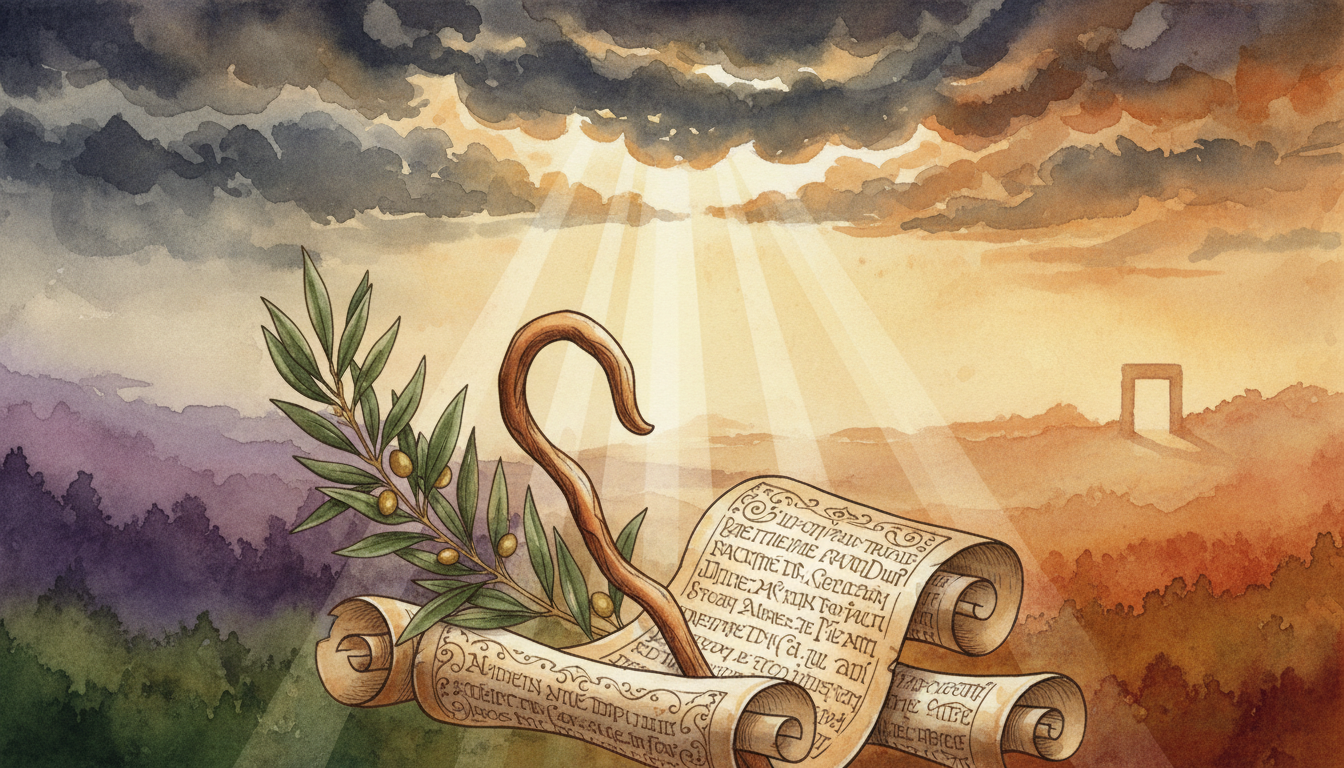
The Book of Psalms: Divine Poetry, Human Faith, and Messianic Hope
A comprehensive exploration of the Psalms as a collection of prayers, praise, and meditations that reflect Israel's lived faith experience, reveal the character of God, anticipate Christ's redemptive work, and continue to shape worship and spiritual practice. This course traces the theological purpose and literary artistry of the Psalms while examining how they address the full range of human experience—from doubt and lament to exuberant praise—always anchored in trust in God's faithfulness.
What you'll study
The Foundation of Faith: Understanding Psalm 1 and the Purpose of the Psalms Collection
Psalm 1
The Intimate God: Psalm 23 and the Personal Relationship at the Heart of Psalmic Theology
Psalm 23
Honest Lament: Psalm 42 and the Psalms' Permission for Doubt, Despair, and Complaint
Psalm 42
The Psalms Across Israel's History: Composition, Collection, and the Post-Exilic Formation
Psalm 73; Psalm 137
Foreshadowing the King: Psalm 110 and Psalm 22 as Messianic Prophecies Fulfilled in Christ
Psalm 110; Psalm 22
From Lament to Exultation: Psalm 139 and Psalm 150 on God's Omniscience, Worship, and Pentecostal Empowerment
Psalm 139; Psalm 150
Chapter 1 · Free to read
The Foundation of Faith: Understanding Psalm 1 and the Purpose of the Psalms Collection
Psalm 1
The Text
Psalm 1:1-6 (BSB) 1 Blessed is the man who does not walk in the counsel of the wicked, or set foot on the path of sinners, or sit in the seat of mockers. 2 But his delight is in the Law of the LORD, and on His law he meditates day and night. 3 He is like a tree planted by streams of water, yielding its fruit in season, whose leaf does not wither, and who prospers in all he does. 4 Not so the wicked! For they are like chaff driven off by the wind. 5 Therefore the wicked will not stand in the judgment, nor sinners in the assembly of the righteous. 6 For the LORD guards the path of the righteous, but the way of the wicked will perish.
Psalm 1:1-6 (Berean Standard Bible (BSB))
Key Terms
- אַשְׁרֵי (ashrei) · ash-RAY
- Blessed, happy, fortunate—but not a shallow happiness. The term denotes the deep well-being and flourishing that comes from right alignment with God's order. In Hebrew thought, this is not an emotional state but a condition of being in covenant right-standing.
- תּוֹרָה (Torah) · to-RAH
- Law, instruction, teaching—but Torah means far more than legal code. It encompasses divine instruction for living well, the revealed pattern of right relationship with God and neighbor. In post-exilic thought, Torah became the constitutive text of Jewish identity and the path to national restoration.
- הִגָּה (higga / hagah) · hig-GAH
- To meditate, murmur, muse, or speak quietly—a deliberate, sustained cognitive and verbal engagement. This is not passive contemplation but active, repetitive reflection. In post-exilic piety, hagah on Torah was the spiritual discipline that sustained individuals when institutional power had failed.
- יִשְׁמַר (yishmár / guard) · yish-MAR
- To guard, watch over, keep, preserve—the vigilant care of a shepherd or sentry. God's guarding of the righteous path is not passive tolerance but active protection and covenant faithfulness. This word anchors the entire Psalm's logic: the righteous person's security rests not in self-defense but in divine guardianship.
Historical Foundation
Post-exilic Second Temple Period, with psalms composed across all of Israel's history
The Jewish people had returned from Babylonian exile (538 BCE onward) and faced the task of reconstructing both their physical temple and their spiritual identity. The Second Temple period was marked by Persian oversight, scribal activity, and the careful preservation and organization of sacred texts. Unlike the monarchy with its court singers and daily sacrificial worship, this period required texts that could sustain personal piety, communal identity, and instruction in Torah righteousness—especially as the community gathered in the rebuilt temple and synagogues. The Psalms collection served as the hymnbook of this renewal: corporate worship, individual devotion, and the voice of the righteous remnant discovering that God's law and presence remained their true security after everything else had been stripped away. Psalm 1 stands at the collection's threshold, establishing the fundamental theological framework—not as a new idea, but as a recovery of what the exile had made unmistakably clear: the righteous person is not defined by political power, military might, or cultic privilege, but by delight in God's law and obedience to it.
Cultural World
The ancient Near East did not lack wisdom literature. The Egyptians produced Instruction texts (like the Instructions of Ptahhotep and Amenemope), and Mesopotamian cultures cultivated wisdom sayings and disputation texts. However, the Hebrew Psalter represents a distinctive synthesis: it combines the instruction-genre structure of wisdom literature (distinguishing the righteous from the wicked, the wise from the foolish) with the covenantal-relational theology unique to Israel's faith tradition. Where Egyptian instruction often aimed at social order and personal advancement within the existing hierarchy, and Mesopotamian wisdom sought cosmic balance, the Psalms anchor righteousness in covenant relationship with YHWH himself. Psalm 1's two-ways motif (the path of the righteous vs. the way of the wicked) echoes the structure of Deuteronomy, which was being actively studied, copied, and taught in post-exilic Jewish communities. The Dead Sea Scrolls show that multiple copies of Deuteronomy and Psalms were preserved together, suggesting that contemporaries understood them as a paired foundation: Deuteronomy as the law, Psalms as the voice of those living under that law—praying it, meditating on it, and discovering God's faithfulness through it. The tree-by-waters imagery (v. 3) evokes both the watered gardens of Mesopotamian royal iconography and the landscape theology of Israel—the land promised to those who keep covenant. This is not borrowed wholesale but engaged and transformed: the righteous person is not the king with his gardens but the humble individual whose flourishing comes through loyalty to God's word, not royal power.
What the Evidence Shows
Psalm 1 functions as the theological vestibule to the entire 150-Psalm collection—a deliberate placement establishing the framework for everything that follows. The text presents a stark binary: blessed is the person whose delight is in the Law (Torah) and who meditates on it day and night (v. 2); cursed is the person who walks in the counsel of the wicked (v. 1). This is not arbitrary moralizing but theological instruction rooted in the post-exilic experience. After 586 BCE, when Judah lost its king, temple, and land to Babylonian destruction, the Jewish community faced an existential question: what makes us righteous? What secures God's blessing when every external marker of favor—dynasty, sacrifice, political power—had been torn away? The answer, Psalm 1 declares, is not institutional but textual and relational: delight in God's law and meditation upon it. The tree-by-streams metaphor (v. 3) is not merely poetic. In the aridity of exile and its aftermath, a tree planted by streams of water represents the person whose roots draw nourishment from an ever-flowing source—Torah itself. By contrast, the wicked are like chaff (v. 4)—weightless, rootless, blown away by the wind. The judgment scene of verses 5-6 projects this present reality into eschatological vindication: the righteous will stand in judgment; the wicked will not. This is recovery theology. The post-exilic community, stripped of political agency, discovers that their true standing depends not on what they have lost but on what remains: God's word and their covenant obligation to meditate on it. Matthew Henry observed that the Psalms collection draws the worshipper 'off from converse with men, with the politicians, philosophers, or disputers of this world, and directs us into communion with God, by solacing and reposing our souls in him.' This insight captures Psalm 1's function: it redirects attention from the kingdoms of the world to the kingdom of God's law—a necessary reorientation for a community learning to survive without political independence. The placement of Psalm 1 at the collection's opening was intentional: it teaches the reader how to read all that follows. Every lament, every petition, every song of praise emerges from the mouths of those whose first commitment is meditation on Torah. The Psalms are not the prayers of the politically powerful but of those who have learned that blessedness comes through delight in God's word.
Scholarly Witness
Henry emphasizes that the Psalms draw the worshipper into 'communion with God, by solacing and reposing our souls in him.' He sees the collection not as a manual of doctrine but as a sanctuary into which the reader enters to meet God. For Henry, Psalm 1 establishes the condition of entry: alignment with God's law and delight in it. This frames the Psalter as a space of intimate encounter with the divine, not mere ethical instruction.
Gill underscores the diversity of Psalm authorship and the post-exilic composition of certain psalms (citing Psalms 126 and 137 as examples). He notes that the book's authority rests not on authorial consistency but on divine inspiration, which he traces through the entire collection. Gill's approach respects both the psalms' varied historical occasions and their unified theological purpose—they are all equally 'spoken by the Holy Ghost.'
These commentators clarify that the Greek term psalmoi and the Hebrew mizmoi both refer to songs accompanied by instruments, particularly the harp. They note that Paul's reference to 'psalms, hymns, and spiritual songs' (Ephesians 5:19) encompasses the full range of poetic forms in the collection. This reinforces that the Psalms are not primarily a doctrinal textbook but a collection meant to be sung, heard, and prayed—an oral and liturgical literature.
Ward emphasizes that the primary requirement for salvation and spiritual growth is personal encounter with God, not comprehensive doctrinal understanding. While Ward writes on soteriology rather than Psalms directly, his hermeneutic illuminates how an Assemblies of God reader should approach Psalm 1: the delight in God's law (v. 2) is not mere intellectual assent but living, personal engagement with God's presence revealed through His word. Meditation on Torah becomes the space of that encounter.
Anderson articulates that Pentecostal hermeneutics uniquely integrate the authority and truth of Scripture with the role of personal experience, church history, and theological conviction. For Psalm 1, this means the reader is not only called to understand the two-ways theology intellectually but to experience it—to taste that the Lord is good (Psalm 34:8), to feel the protection of God's guardianship (v. 6), to encounter God's presence through meditation on His law. The Psalms become a space where doctrine and lived experience converge.
Childs (training-assisted) argued that Psalm 1 was deliberately prefixed to the Psalter collection to function as a hermeneutical guide: it establishes that the reader should approach the entire collection as a meditation on Torah and covenant faithfulness. This reading treats the placement itself as theological instruction—Psalm 1 teaches you how to read Psalms 2-150.
Discovery Questions
1.Psalm 1 repeats the word 'path' or 'way' three times in different contexts (vv. 1, 5-6). What is the difference between 'walking in the counsel of the wicked' (v. 1) and the 'path of the righteous' that the Lord guards (v. 6)? What makes one a path worth walking and the other one worth avoiding?
The evidence shows that in post-exilic thought, the righteous path is defined not by political power or military might, but by delight in and meditation on God's law (Torah). The psalm emerges from a community that had lost everything external—king, temple, land—and discovered that their true security rested in covenant obedience and God's word. The 'counsel of the wicked' represents a worldview that ignores God's law; the righteous path is one oriented entirely toward it. This is recovery theology: the deepest resources remain when everything else is stripped away.
2.Verse 3 describes the righteous person as 'a tree planted by streams of water, yielding its fruit in season, whose leaf does not wither.' Verse 4 says the wicked are 'like chaff driven off by the wind.' Why does the psalm use the metaphor of a planted tree for the righteous and chaff for the wicked? What does each image suggest about rootedness and stability?
The evidence shows that this imagery is thoroughly rooted in the post-exilic experience: a people who had been uprooted from their land, scattered to Babylon, and were now being replanted back in Judea. The tree-by-streams metaphor represents the person whose roots are fed by an ever-flowing source—God's law and faithfulness. The chaff image echoes the winnowing process: chaff is the useless byproduct that is separated from grain and blown away. The psalm is teaching that stability comes not from external circumstances (political power, military strength) but from being rooted in God's word and covenant. The righteous person, even in exile or loss, remains fruitful because their source is inexhaustible; the wicked, despite outward appearance, are ultimately rootless and will be scattered.
3.Verse 2 says the righteous person's 'delight is in the Law of the LORD, and on His law he meditates day and night.' This echoes Joshua 1:8, where God commands Joshua to 'meditate on it [the Law] day and night.' What connection do you see between meditation on God's law and the ability to face uncertain circumstances (Joshua faced conquest; the Psalm 1 community faced exile's aftermath)?
The evidence shows that meditation (Hebrew hagah) is not passive contemplation but active, sustained engagement with God's word—a spiritual discipline that sustains the righteous person when circumstances are uncertain or threatening. For Joshua, meditation on the law precedes and enables successful conquest. For the post-exilic community, meditation on the law becomes the path to identity and blessing when political power is unavailable. The psalm is teaching that the deepest source of strength and security is not external victory but internal alignment with God's word. This is why the Assemblies of God tradition, which emphasizes personal encounter with God, would understand meditation on Torah as the space where the believer meets God and receives the sustenance to thrive.
4.Psalm 1 presents a stark two-ways theology: verses 1-3 describe the righteous person's blessedness; verses 4-6 describe the wicked person's certain judgment. But real life seems more complicated—righteous people suffer, and wicked people sometimes prosper. How does understanding the psalm's post-exilic setting (after loss of king, temple, and land) help explain why the community would be drawn to this stark framework? What is the psalm actually teaching about God's ultimate justice, not immediate circumstances?
The evidence shows that Psalm 1 is teaching eschatological hope grounded in covenant theology, not claiming that righteousness always brings immediate prosperity or that wickedness brings instant punishment. The psalm's starkness serves a specific purpose: it calls the post-exilic community to trust that God's moral order is real and will ultimately be vindicated, even when present circumstances seem to contradict it. The judgment scene (v. 5) is future-oriented ('will not stand'), and God's guardianship of the righteous path (v. 6) is an ongoing covenant promise, not a guarantee of immediate material success. The Assemblies of God tradition, with its emphasis on personal relationship and Spirit-led discernment, would recognize that the psalm is calling believers to align their hearts with God's ultimate purposes, not to expect a trouble-free earthly existence. This reorients the reader's hope: blessedness comes not from avoiding hardship but from maintaining covenant loyalty and trust in God's final vindication.
Connected Passages
- Joshua 1:8 — Establishes the foundational command to 'meditate on [the Law] day and night, that you may be careful to do according to all that is written in it.' Psalm 1:2 echoes this exact language and context, suggesting that meditation on Torah is the spiritual discipline that precedes and enables God's protection and blessing. Both texts link meditation to successful navigation of uncertainty.
- Deuteronomy 30:15-19 — Presents the original two-ways theology: 'I set before you today life and good, death and evil.... Choose life, that you and your offspring may live, loving the Lord your God, obeying his voice and holding fast to him.' Psalm 1 applies this Deuteronomic framework to post-exilic readers: the choice between paths remains available; the stakes remain ultimate.
- Jeremiah 17:8 — Uses the same tree-by-water metaphor as Psalm 1:3—'He is like a tree planted by the waters, that sends out its roots by the stream, and does not fear when heat comes, for its leaves remain green.' Jeremiah's oracle appears to be directly echoed in Psalm 1, showing that this imagery of stability rooted in covenant trust became a central metaphor for post-exilic hope.
- Psalm 119:97-104 — The longest psalm in the collection, Psalm 119 is entirely devoted to meditation on Torah and delight in God's law—precisely what Psalm 1 calls the reader to. Psalm 119 expands Psalm 1's invitation, showing how meditation on God's word produces wisdom, discernment, and protection. Together, Psalms 1 and 119 frame the entire collection as a space for sustained engagement with God's law.
- Malachi 3:18 — Projects into the post-exilic future: 'Then once more you will see the distinction between the righteous and the wicked, between those who serve God and those who do not.' The final book of the Old Testament canon echoes Psalm 1's promise that God will ultimately vindicate the righteous and judge the wicked—the eschatological hope that sustains the psalms.
- Romans 7:22 — Paul uses the language of delight in God's law: 'I delight in the law of God in my inner being'—directly echoing the language of Psalm 1:2. This shows that the framework established in Psalm 1 remained alive in New Testament theology: the righteousness of the believer flows from alignment with God's word, not from works-righteousness or legal externalism.
- 2 Timothy 2:19 — 'The Lord knows those who are his' and 'everyone who confesses the name of the Lord must turn away from wickedness'—echoing Psalm 1's promise that 'the Lord guards the path of the righteous' (v. 6). The pastoral epistles apply Psalm 1's framework to church leadership and community discernment.
- Jude 1:11-12 — Describes false teachers who 'have gone in the way of Cain... are like chaff' (echoing Psalm 1:4). The New Testament appropriates the psalm's imagery to warn against those who have abandoned the way of righteousness and align themselves with the wicked counsel the psalm warns against.
- John 15:5-6 — Jesus uses the tree metaphor in a new covenant context: 'I am the vine, you are the branches... If you remain in me and I in you, you will bear much fruit... If you do not remain in me, you are like a branch that is thrown into the fire and burned.' The psalm's promise that the righteous person will bear fruit (Psalm 1:3) is reinterpreted through union with Christ—the ultimate source of life-sustaining nourishment.
Takeaways
- Psalm 1 establishes that true blessedness (ashrei) comes not from political power, military might, or outward circumstances, but from delight in God's law and the spiritual discipline of meditation on it. For the post-exilic community stripped of king and temple, this was revolutionary: their standing before God depended not on what had been lost but on what remained—God's word and their covenant obligation. This is recovery theology, and it speaks powerfully to anyone facing loss or uncertainty today.
- The two-ways theology Psalm 1 presents is eschatological, not immediate. The psalm does not claim that righteousness brings instant prosperity or that wickedness brings instant punishment. Rather, it calls the reader to trust that God's moral order is real and will be ultimately vindicated, even when present circumstances seem to contradict it. The righteous will 'stand in the judgment' (v. 5); the wicked 'will perish' (v. 6)—but both are future-oriented promises that require faith now.
- Meditation on God's law (hagah)—active, sustained, repeated engagement with Scripture—is the core spiritual discipline of the righteous person. This is not passive contemplation or intellectual study alone, but a practice of dwelling on God's word day and night, letting it shape your speech, thought, and behavior. For the Assemblies of God tradition, which emphasizes personal encounter with God's Spirit, meditation on Scripture becomes the space where believers meet God and receive power for transformation.
- The righteous person is described through organic metaphors: a tree planted by streams of water, yielding fruit in season, with leaves that do not wither (v. 3). This imagery teaches that spiritual fruitfulness flows from being rooted in an inexhaustible source—God's faithfulness and presence. Rootedness, not movement or achievement, is the mark of the blessed life. The wicked, by contrast, are like chaff—weightless, rootless, destined to be scattered. The choice between paths is ultimately a choice between rootedness and rootlessness.
- Psalm 1 functions as the theological gateway to the entire 150-Psalm collection: it teaches readers how to approach all that follows. Every lament, petition, and song of praise in the Psalter emerges from the mouths of those whose first commitment is alignment with God's law. The Psalms are not the prayers of the politically powerful but of those who have discovered that blessing comes through covenant fidelity and delight in God's word. This reframes the entire collection as a manual for the righteous—those committed to meditation on Torah and allegiance to God.
Application
Reflect on this week: Where have you been tempted to seek blessing, security, or identity through the counsel of the wicked—through worldly pursuits, relationships that pull you away from God, or circumstances that promise satisfaction but do not deliver? What would it look like to actively realign your delight toward God's law? Choose one practice this week: Set aside 15 minutes daily to meditate on a passage of Scripture (perhaps Joshua 1:8, Deuteronomy 30:15-19, or Psalm 119:97-104). Not study—meditation. Read slowly, speak it aloud, let it reshape your thoughts. Notice where your roots are actually being nourished. At week's end, ask: Did this practice change what I delight in? Did it stabilize my sense of God's protection and care? The Psalms invite you into this sustained rhythm. Will you plant yourself by the streams of God's word?
Continue the course — 5 more chapters
The Intimate God: Psalm 23 and the Personal Relationship at the Heart of Psalmic Theology
Psalm 23
How does Psalm 23 reveal the central theological conviction of the Psalms—that God is personally invested in the believer's welfare and trustworthy in all circumstances?
Honest Lament: Psalm 42 and the Psalms' Permission for Doubt, Despair, and Complaint
Psalm 42
How do lament psalms like Psalm 42 model authentic faith that acknowledges suffering and questions while maintaining confidence in God's ultimate faithfulness?
The Psalms Across Israel's History: Composition, Collection, and the Post-Exilic Formation
Psalm 73; Psalm 137
How do the Psalms reflect Israel's lived experience across different historical periods, and what does their post-exilic compilation tell us about their enduring spiritual significance?
Foreshadowing the King: Psalm 110 and Psalm 22 as Messianic Prophecies Fulfilled in Christ
Psalm 110; Psalm 22
How do these messianic psalms anticipate and directly foreshadow Jesus Christ's kingship, suffering, and redemptive work as affirmed throughout the New Testament?
From Lament to Exultation: Psalm 139 and Psalm 150 on God's Omniscience, Worship, and Pentecostal Empowerment
Psalm 139; Psalm 150
How do the Psalms culminate in both intimate knowledge of God's presence and corporate worship, and what role do they play in Pentecostal celebration of the Holy Spirit's empowerment?
No credit card required
Sources Used
Every insight traces to a named source. 0 AI-generated interpretations.
Related courses
Bible Verses About Hope: A Canonical Study of Biblical Hope from Promise to Fulfillment
This five-chapter course traces the biblical theology of hope through primary texts and their historical contexts, from Old Testament expressions of trust in exile to New Testament proclamation of hope anchored in Christ's resurrection. Each chapter begins with a foundational passage and explores how linguistic, theological, and historical evidence deepens our understanding of what the Bible means by hope—not optimism or wishful thinking, but confident trust in God's character and promises despite present circumstances.
5 chapters
What Does the Bible Say About Faith? Recovering Covenant Trust, Embodied Obedience, and Communal Faithfulness
This course deepens understanding of biblical faith (emunah/pistis) beyond modern definitions of belief to recover the original semantic and relational richness of the texts. Through careful study of key passages across the canon, learners will discover that biblical faith operates as covenant trust, finds expression in embodied obedience, and exists within communal faithfulness. Rather than an internal conviction alone, faith in Scripture is a dynamic trust-in-action directed toward God, rooted in His promises, and demonstrated through practical loyalty. This course traces faith from Abraham through the incarnation, showing how the concept develops while maintaining its core relational character, and invites learners to experience their own faith deepened rather than dismantled.
5 chapters
The Richer Biblical Cosmology of Spiritual Conflict and Divine Authority
This course deeply explores the biblical understanding of spiritual conflict, moving beyond modern interpretations to uncover a more nuanced and profound biblical cosmology. Through primary texts, historical context, and linguistic analysis, learners will discover the breadth of spiritual adversaries, the origins of evil, and the foundational authority of God and Christ over all spiritual realms. The aim is to deepen faith and cultivate a richer appreciation for the Bible's teaching on spiritual warfare, framing this exploration as an enrichment and recovery of ancient wisdom.
5 chapters
Steadfast Hope: A Biblical Study on Patience and Endurance
This course explores the multifaceted biblical teachings on patience and endurance, delving into their linguistic nuances, theological significance, and practical application. Through a progressive examination of key scriptural passages, we will uncover how these virtues are exemplified, empowered, and purposed within the Christian life, ultimately fostering a deeper appreciation for God's redemptive work and our role in it.
6 chapters
The Parable of Lazarus and the Rich Man: Mercy, Justice, and the Hope of Resurrection
This five-chapter course explores Luke 16:19-31 as a window into Jesus' teaching on wealth, divine mercy, economic justice, and the biblical hope of bodily resurrection. Rather than treating this parable as a simple cautionary tale about the afterlife, we recover its original richness by reading it carefully within Luke's Gospel, the testimony of Moses and the Prophets, and early Christian witness. Each chapter anchors in the biblical text itself, then enriches our understanding through historical, theological, and cultural evidence. You will discover that the parable teaches something far more transformative than inherited tradition often suggests—God's persistent mercy, the urgent call to justice, and the concrete hope of renewed creation.
5 chapters
Prayer in the Bible: A Journey into Divine Communication
This course explores the multifaceted nature of prayer as revealed in the biblical text, from its earliest forms in the Old Testament to its profound development in the teachings and example of Jesus and the early church. We will uncover the purpose, practice, and power of prayer through textual, historical, cultural, linguistic, and theological lenses, revealing how God invites humanity into intimate communion.
6 chapters
Create your own Bible studies — free.
Ask any question. Get evidence from named scholars and curated datasets in minutes.
Get Started Free