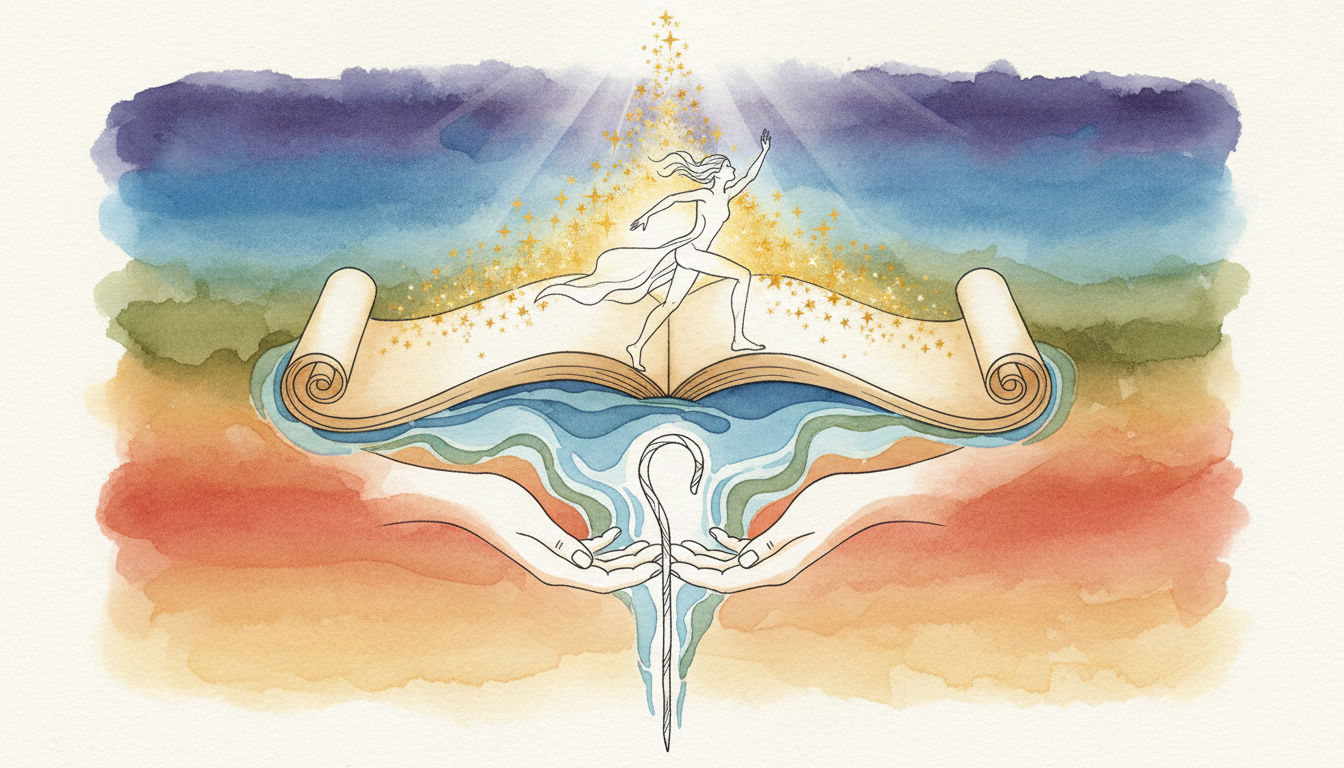
What Does the Bible Say About Faith? Recovering Covenant Trust, Embodied Obedience, and Communal Faithfulness
This course deepens understanding of biblical faith (emunah/pistis) beyond modern definitions of belief to recover the original semantic and relational richness of the texts. Through careful study of key passages across the canon, learners will discover that biblical faith operates as covenant trust, finds expression in embodied obedience, and exists within communal faithfulness. Rather than an internal conviction alone, faith in Scripture is a dynamic trust-in-action directed toward God, rooted in His promises, and demonstrated through practical loyalty. This course traces faith from Abraham through the incarnation, showing how the concept develops while maintaining its core relational character, and invites learners to experience their own faith deepened rather than dismantled.
What you'll study
The Origin and Root of Faith: Abraham's Trust and God's Covenant (Genesis 15:1-6; Romans 4:1-12)
Genesis 15:1-6: 'After these things the word of the LORD came to Abram in a vision: "Do not be afraid, Abram. I am your shield, your very great reward." But Abram said, "Sovereign LORD, what can you give me since I remain childless and the one who will inherit my estate is Eliezer of Damascus?" And Abram said, "You have given me no children; so a servant in my household will be my heir." Then the word of the LORD came to him: "This man will not be your heir, but a son who is your own flesh and blood will be your heir." He took him outside and said, "Look up at the heavens and count the stars—if indeed you can count them." Then he said to him, "So shall your offspring be." Abram believed the LORD, and he credited it to him as righteousness." Romans 4:1-12: Paul exegetes this passage to show that Abraham\'s faith—not his works or circumcision—was the foundation of his covenant relationship with God.','focusQuestion':'What is the foundational nature of biblical faith, and how does Abraham\'s trust in God\'s promise establish the pattern for all covenant faith?','evidencePriority':['textual','linguistic','theological','relational','commentary']},{
Faith as Trust Despite Uncertainty: Wrestling, Lament, and the Refusal of Easy Answers (Job 1-2, 23, 42:1-6; Psalms 13, 22, 77; Habakkuk 3:17-19)
Habakkuk 3:17-19: 'Though the fig tree does not bud and there are no grapes on the vines, though the olive crop fails and the fields produce no food, though there are no sheep in the pen and no cattle in the stalls, yet I will rejoice in the LORD, I will be joyful in God my Savior. The Sovereign LORD is my strength; he makes my feet like the feet of a deer, he enables me to tread on the heights.' Job 42:1-6: 'Then Job replied to the LORD: "I know that you can do all things; no purpose of yours can be thwarted. You asked, \'Who is this that obscures my counsel without knowledge?\' Surely I spoke of things I did not understand, things too wonderful for me to know. You said, \'Listen now, and I will speak; I will question you, and you shall answer me.\' My ears had heard of you but now my eyes have seen you. Therefore I despise myself and repent in dust and ashes."'
Faith Embodied in Action: Works, Obedience, and the Living Faith of James and Abraham (Genesis 22:1-19; James 2:14-26; Hebrews 11:17-19)
James 2:14-26: 'What good is it, my brothers and sisters, if someone claims to have faith but has no deeds? Can such faith save them? Suppose a brother or sister is without clothes and daily food. If one of you says to them, "Go in peace; keep warm and well fed," but does nothing about their physical needs, what good is that? In the same way, faith by itself, if it is not accompanied by action, is dead. But someone will say, "You have faith; I have deeds." Show me your faith without deeds, and I will show you my faith by my deeds. You believe that there is one God. Good! Even the demons believe that—and shudder. You foolish person, do you want evidence that faith without deeds is useless? Was not our ancestor Abraham considered righteous for what he did when he offered his son Isaac on the altar? You see that his faith and his actions were working together, and his faith was made complete by what he did. And the scripture was fulfilled that says, "Abraham believed God, and it was credited to him as righteousness," and he was called God\'s friend. You see that a person is considered righteous by what they do and not by faith alone.'
Faith in Jesus Christ: The Incarnate Model and the Pivot Point of Biblical Faith (Mark 4:35-41; Mark 5:25-34; John 3:16-18; 1 John 5:1-5; Hebrews 11:1-3)
John 3:16-18: 'For God so loved the world that he gave his one and only Son, that whoever believes in him shall not perish but have eternal life. For God did not send his Son into the world to condemn the world, but to save the world through him. Whoever believes in him is not condemned, but whoever does not believe stands condemned already because they have not believed in the name of God\'s one and only Son.' Mark 4:35-41: 'That day when evening came, he said to his disciples, "Let us go over to the other side." Leaving the crowd behind, they took him along, just as he was, in the boat. There were also other boats with him. A furious squall came up, and the waves broke over the boat, so that it was nearly swamped. Jesus was in the stern, sleeping on a cushion. The disciples woke him and said to him, "Teacher, don\'t you care if we drown?" He got up, rebuked the wind and said to the waves, "Quiet! Be still!" Then the wind died down and it was completely calm. He said to his disciples, "Why are you so afraid? Do you still have no faith?" They were terrified and asked each other, "Who is this? Even the wind and the waves obey him!"'
Faith Maturing Across the Canon: From Patriarchal Trust to Apostolic Practice (2 Corinthians 5:7; 1 Thessalonians 5:8; Hebrews 11; 1 Peter 1:3-9; Revelation 14:12)
Hebrews 11:1-3, 39-40: 'Now faith is confidence in what we hope for and assurance about what we do not see. This is what the ancients were commended for. By faith we understand that the universe was formed at God\'s command, so that what is seen was not made out of what was visible... These were all commended for their faith, yet none of them received what had been promised, since God had planned something better for us so that only together with us would they be made perfect.' 2 Corinthians 5:6-7: 'So we are always confident and know that as long as we are at home in the body we are away from the Lord. For we live by faith, not by sight.' 1 Peter 1:3-9: 'Praise be to the God and Father of our Lord Jesus Christ! In his great mercy he has given us new birth into a living hope through the resurrection of Jesus Christ from the dead, and into an inheritance that can never perish, spoil or fade. This inheritance is kept in heaven for you, who through faith are shielded by God\'s power until the coming of the salvation that is ready to be revealed in the last time. In all this you greatly rejoice, though now for a little while you may have had to suffer grief in all kinds of trials. These have come so that the proven genuineness of your faith—of greater worth than gold, which perishes even though refined by fire—may result in praise, glory and honor when Jesus Christ is revealed.'
Chapter 1 · Free to read
The Origin and Root of Faith: Abraham's Trust and God's Covenant (Genesis 15:1-6; Romans 4:1-12)
Genesis 15:1-6: 'After these things the word of the LORD came to Abram in a vision: "Do not be afraid, Abram. I am your shield, your very great reward." But Abram said, "Sovereign LORD, what can you give me since I remain childless and the one who will inherit my estate is Eliezer of Damascus?" And Abram said, "You have given me no children; so a servant in my household will be my heir." Then the word of the LORD came to him: "This man will not be your heir, but a son who is your own flesh and blood will be your heir." He took him outside and said, "Look up at the heavens and count the stars—if indeed you can count them." Then he said to him, "So shall your offspring be." Abram believed the LORD, and he credited it to him as righteousness." Romans 4:1-12: Paul exegetes this passage to show that Abraham\'s faith—not his works or circumcision—was the foundation of his covenant relationship with God.','focusQuestion':'What is the foundational nature of biblical faith, and how does Abraham\'s trust in God\'s promise establish the pattern for all covenant faith?','evidencePriority':['textual','linguistic','theological','relational','commentary']},{
The Text
Genesis 15:1–6 (ESV): 'After these things the word of the LORD came to Abram in a vision:
Gen 15:1-6; Rom 4:1-12; Gal 3:6 ; Jam 2:23 (After these things, God's word came to Abram in a vision with this assurance: 'Do not be afraid, Abram. I myself am your protective shield, and your reward—vastly exceeding anything you might imagine.' But Abram objected: 'Lord God, what can you give me? I go through life without a child, and my household servant Eliezer of Damascus will inherit everything I have.' Abram continued: 'Since you have given me no offspring, the servant born in my house will be my heir.' Then God's word came again: 'This man will not be your heir. Instead, a son who comes from your own body will inherit from you.' God then brought him outside and said: 'Look toward the heavens and count the stars—if you are able to count them.' Then he said: 'So shall your offspring be.' And Abram believed the LORD, and God counted it to him as righteousness.)
Key Terms
- אָמַן (ʾāman) · aman
- To believe, trust, be firm, stand fast. In this context, Abram's trust in God's promise—not merely intellectual assent but relational confidence in God's character and faithfulness. The verbal form expresses active, ongoing trust.
- הֶאֱמִן אֶת־יְהוָה (he'emin et-YHWH) · he'emin et-Yahweh
- 'He believed/trusted in the LORD'—a complete phrase emphasizing that Abraham's trust was directed toward God's person and character. The direct object marker ('et') intensifies the personal relationship: Abraham trusted not merely in a promise but in the God making the promise.
- וַיַּחְשְׁבֶהָ לוֹ צְדָקָה (wayyaḥshĕbehā lo tseḏāqâ) · wayyahshvehah lo tsedakah
- 'And it [his faith] was credited/reckoned to him as righteousness.' The verb 'ḥāšab' means to count, reckon, or attribute. God imputes Abraham's faith as his standing of covenant righteousness—not because of works, deeds, or ritual, but because his trust aligns him with God's promise and character.
- צֹא (tso ʾ) / מִגְדָּל (migdāl) · tso / migdal
- 'Shield' (literally, 'coverage, protection') and 'reward' or 'wages' respectively. God positions himself as Abraham's complete security and his ultimate prize. In the ANE, a suzerain (overlord) would provide protection to a vassal in exchange for loyalty; here, God offers both—he is both Abraham's protector and his promised recompense.
Historical Foundation
Patriarchal Age, Early Bronze Age III–II (circa 2000–1800 BC)
Abraham lived in an era of widespread tribal migration across the Fertile Crescent. The ancient Near East (ANE) was populated by nomadic and semi-nomadic peoples who moved with their herds, negotiated with settled city-states, and bound themselves through solemn covenant ceremonies. Ur of the Chaldees (modern-day southern Iraq, approximately 30.96°N, 46.10°E) was a major Sumerian city-state—Abraham's original home before his migration northward to Haran and then southwest into Canaan. The covenant-making practice Abraham participated in (Genesis 15:9–17) was a recognized ANE legal and religious institution. Contemporaneously, other ancient Near Eastern peoples (Hittites, Egyptians, Mesopotamians) employed binding oath-ceremonies sealed by ritual animal sacrifice. The political landscape was fluid: small groups like Abraham's household could acquire wealth through military action (Genesis 14) and negotiate with local powers. The promise of a countless offspring and territorial possession would have resonated powerfully in this context—security, continuity, and inheritance were foundational to tribal survival and honor. Abraham's childlessness at this point was not merely personal disappointment; it threatened the entire covenant trajectory God had initiated at his call (Genesis 12:1–3).
Cultural World
Abraham's narrative occurs within the context of ANE covenant-making practices. The Hittite suzerainty treaties (documented from the second millennium BC, particularly from the Late Bronze Age Hittite archives at Boğazköy, Turkey) provide the closest parallels to the covenant structure in Genesis 15. These treaties typically included: (1) a preamble identifying the suzerain (overlord); (2) historical prologue establishing the suzerain's beneficence toward the vassal; (3) the covenant stipulations; (4) provisions for deposit and public reading; and (5) curses and blessings. While the Genesis 15 covenant is not a suzerainty treaty per se, it employs recognizable ANE covenant-sealing language. The 'covenant-cutting' ceremony (Genesis 15:9–17)—where animals are ritually divided and the covenant-maker passes between the pieces—appears in Jeremiah 34:18 and is attested in ANE texts. The Mari Letters (from Zimri-Lim's palace in northern Mesopotamia, 18th century BC) and Nuzi tablets (15th century BC) document similar practices among nomadic and semi-nomadic groups. The promise of innumerable offspring and territorial possession aligns with ANE royal grant terminology, where a sovereign promises a dynasty and territory to a favored servant. The role of 'vision' (Genesis 15:1) as a vehicle for divine communication was recognized across ANE cultures—in Mesopotamian tradition, kings and priests received word through dreams and visions.
What the Evidence Shows
Faith in the biblical narrative is not a human achievement or emotional state—it is a covenantal posture of trust that aligns the believer with God's character and promise. In Genesis 15, Abraham's context is crucial: he has just rescued Lot from military captors (Genesis 14), declined reward from the king of Sodom (Genesis 14:21–24), and now faces the reality that his household faces an inheritance crisis. At age 85 (as Sarai is barren), the promise of Genesis 12:2–3 appears impossibly deferred. God's word comes to him in a vision, not as philosophical abstraction but as personal encounter, directly addressing his fears ('Fear not, Abram'). The statement 'I am your shield, your very great reward' reorients Abraham's entire framework: his security is not in military victory or political alliance but in God's binding commitment. Abraham's response is crucial—he does not suppress doubt but voices it directly. His objection ('What can you give me, seeing I remain childless?') is not sin but honest engagement with the promise. The text does not record God rebuking this question; instead, God responds with even greater clarity: a son from Abraham's own body will be his heir. The visual sign—counting the stars—is not mere poetic imagery but a covenant-sealing visual aid. God takes Abraham outside, uses the visible heavens as a mnemonic device, and connects Abraham's future offspring to the uncountable stars. Only then does the text record: 'Abram believed the LORD, and it was credited to him as righteousness.' The Greek translation (Septuagint, 3rd–2nd century BC) renders this as 'he believed God' (episteusē tō theō), and Paul later quotes this exact moment (Romans 4:3; Galatians 3:6) to prove that righteousness comes through faith, not works or lineage. What the evidence shows is that Abraham's faith is not a supernatural leap beyond reason—it is a rational trust response to God's self-disclosure and repeated promise. The covenant-cutting ceremony that follows (Genesis 15:9–17) demonstrates that God has bound himself in ANE legal form. The 'smoking furnace and flaming torch' (Genesis 15:17) passing between the divided animals is a visual theophany—God's presence alone passes through, indicating that God, not Abraham, bears the covenant obligation. This is crucial: Abraham is not making a two-way treaty but receiving a covenant promise that God will fulfill unilaterally.
Scholarly Witness
Henry emphasizes that God's covenant with Abraham comes 'after these things'—after Abraham's act of generous charity in rescuing Lot—demonstrating that 'those that show favour to men shall find favour with God.' This reframes Abraham's trust not as an isolated emotional state but as the outcome of a life oriented toward covenant generosity. Henry also stresses that God's presence ('I am thy shield') is 'present with thee, actually caring for thee,' making faith relational and personal, not abstract. His interpretation roots faith in God's active, caring intervention.
Gill identifies the 'word of the Lord' in Genesis 15:1 as 'Christ, the essential Word, appeared to Abram in an human form,' reading the theophany as Christophany. He emphasizes that Abraham's faith addresses the substance of the promise ('the blessed Messiah, in whom all nations shall be blessed'), making faith not merely in God's ability to give a child but in God's redemptive purpose through the promised seed. Gill's identification of Eliezer as 'his chief confidential servant' uses ANE household structure to illuminate why Abraham's concern is so acute—a servant-heir fundamentally contradicts the patriarchal lineage promise.
The authors note that 'the declaration, I am thy exceeding great reward had but one meaning...he was still experiencing the sickness of hope deferred.' This captures the psychological and spiritual tension Abraham faces: God's promise feels abstract while his childlessness is concrete. Their phrase 'sickness of hope deferred' (referencing Proverbs 13:12) reveals that faith is tested by delay. They also analyze the covenant-cutting ceremony as God's condescension to 'Eastern ideas'—God uses recognized ANE covenant-sealing forms to assure Abraham. Critically, 'the Lord Himself condescended to enter into covenant with Abram...the patriarch did not pass between the sacrifice...he was bound to nothing...God was pleased to give him a sign.' This reads the ceremony as God's unilateral oath, not a mutual contract, which is exegetically sound.
Heiser argues that the covenant-cutting ceremony demonstrates God's self-binding commitment as the sole covenant-maker (since only the divine presence—'smoking firepot and flaming torch'—passes between the pieces, while Abraham sleeps). This reading emphasizes that Abraham is not a covenant-equal but a beneficiary of an unconditional divine grant. Heiser positions this within ANE covenant theology: God employs the recognizable treaty-form to communicate binding obligation within Abraham's cultural framework. The promise is not conditional on Abraham's performance but on God's character (hence 'I am your shield'). Heiser's work popularized the 'divine council' concept, though Genesis 15 does not explicitly reference other divine beings—the focus is bilateral (God and Abraham alone).
Walton emphasizes that ANE covenant-making was a recognized legal and religious institution, and that God's use of covenant-cutting (brit karait) demonstrates God's willingness to communicate through culturally recognizable forms. Walton argues that the promise structure—'I am your shield, your reward'—employs suzerain terminology familiar in Hittite and Mesopotamian texts. The vision-reception and direct address ('Fear not, Abram') parallels ANE royal grant practices where a sovereign initiates promise to a chosen vassal. Walton's work grounds Genesis 15 not in speculative theology but in documented ANE practice, which enriches understanding of how Abraham would have received and processed God's covenant.
Paul's exegesis of Genesis 15:6 in Romans 4:1–12 and Galatians 3:6–9 is the most important post-patriarchal witness to the meaning of Abraham's faith. Paul argues that Abraham's righteousness came through faith (pistis / emunah) before circumcision and before the law—establishing faith as the foundational basis for all believers, Jew and Gentile alike. Paul's claim ('Abraham believed God, and it was reckoned to him as righteousness') is cited verbatim from Genesis 15:6 (Septuagint). Paul uses Abraham as the prime witness that righteousness is imputed through faith-trust, not earned through works. This interpretation became authoritative for Christian theology and remains the clearest exegetical key to Genesis 15 in Christian tradition.
Discovery Questions
1.Read Genesis 15:1–6 carefully. What is Abraham's emotional and spiritual state at the beginning of this encounter? What specific concern does he voice to God?
Abraham's objection reveals that childlessness was not merely personal sadness but a legal and inheritance crisis. In ANE culture (documented in Nuzi tablets from the 15th century BC), a childless couple could formally adopt a servant to secure inheritance. Abraham has already done this with Eliezer of Damascus. His question is not skepticism but honest acknowledgment of reality: 'Given my age and Sarai's barrenness, and given that I've already made legal provision for a servant-heir, what can God actually give me?' This shows Abraham engaging his mind with God's promise, not suspending reason. God does not rebuke this engagement—he responds with greater clarity. Faith, in this passage, is not blind but informed trust.
2.Genesis 15:5 says God took Abraham 'outside' and told him to count the stars. Why would God use this particular sign? What does the star-counting accomplish that a mere verbal promise might not?
God uses a visible, physical sign as a memory anchor and as a measure of scale. The infinite stars become the visual metaphor for Abraham's infinite offspring—something Abraham cannot add up or comprehend, just as he cannot count all the stars. This demonstrates a pattern in Scripture: God uses concrete, sensory signs to communicate spiritual truths. The sign does not create faith—rather, faith is the trust-response to God's sign and word together. In ANE covenant practices (documented in Hittite treaties and Mesopotamian texts), visible signs or symbols sealed the covenant and made it memorable. God's use of the stars turns the night sky itself into a perpetual witness to his promise. Every night Abraham sees the stars, he is seeing God's covenant commitment.
3.Compare God's opening statement in Genesis 15:1 ('I am your shield, your very great reward') with what Abraham actually wants (a son). Why would God call himself a 'reward' when Abraham is clearly asking for a child?
God's statement redefines what 'reward' means. In Genesis 14, Abraham refused to take wealth from the king of Sodom, saying he didn't want anyone to say they had made Abraham rich (Genesis 14:22–23). God's response is: 'I am your reward'—meaning, the covenant relationship itself, and God's faithfulness, is worth more than any accumulation of goods. A son will come, but the real reward is knowing God and being in covenant with him. This shifts Abraham's focus from external provision to relationship. When Abraham 'believed the LORD' in verse 6, his faith was not merely 'God will give me a son' but 'I trust God himself.' This is why Paul later can say Abraham's faith 'was credited to him as righteousness'—because faith in God's character, not just confidence in a promise, establishes right-standing in covenant.
4.Read Romans 4:1–12, where Paul exegetes Genesis 15:6. Paul argues that Abraham's righteousness came through faith, before circumcision and before the law. What does Paul mean? And why does it matter for how we understand faith in Genesis 15?
Paul's exegesis reveals that faith itself—trust-response to God's self-disclosure—is the foundation of covenant righteousness. Abraham's standing before God was established by one thing: his belief in God's promise. This became the template for all believers. No one in Paul's churches could become a child of Abraham through circumcision or law-keeping; they were to become Abraham's children through the same faith-trust Abraham exercised. This interpretation was controversial (other Jewish teachers emphasized Torah and works), but Paul grounded it directly in the patriarch's experience. Genesis 15:6 became the cornerstone of the Christian understanding of justification by faith. The faith Abraham exercised—trust in God despite impossibility—is the same faith Christians are called to exercise toward Christ and his promises.
Connected Passages
- Genesis 12:1–3 — The original covenant-call to Abraham. God promises land, progeny, and universal blessing. Genesis 15 returns to these promises and makes them concrete and covenantally binding. The 'fear not' of 15:1 echoes the trust required in 12:1 ('Go from your country, your relatives, and your father's household').
- Genesis 17:1–27 — God renews the covenant, changes Abram's name to Abraham ('father of a multitude'), confirms the promise of Isaac, and establishes circumcision as the covenant sign. But notably, Romans 4:10 points out that Genesis 15:6 (faith credited as righteousness) occurred before Genesis 17 (circumcision). This order is exegetically crucial—faith precedes the sign.
- Hebrews 11:8–12 — Abraham is called 'the father of faith.' The text says 'by faith Abraham obeyed...and by faith...he sojourned...for he was looking forward to the city whose designer and builder is God.' Genesis 15's faith-response is the prototype of the faith Hebrews celebrates as the substance of hope in the unseen.
- Romans 4:1–12 and Galatians 3:6–9 — Paul's definitive exegesis of Genesis 15:6. He quotes the verse verbatim to argue that righteousness comes through faith, not works or ethnic privilege. Abraham becomes the proof-text for justification by faith and the father of all believers (Gentile and Jew) who believe.
- James 2:21–26 — James argues that 'Abraham believed God, and it was credited to him as righteousness' (quoting Genesis 15:6), but then says 'faith without works is dead.' James uses the same verse to make a different point: Abraham's faith was demonstrated through his works (especially the binding of Isaac in Genesis 22). This shows that Genesis 15:6 became a focal point for biblical discussions of faith and works—both Paul and James cite it to support their positions.
- Genesis 15:9–17 (covenant-cutting ceremony) — The continuation of Genesis 15 shows God sealing the covenant with visible signs: the divided animals and the passing of the 'smoking furnace and flaming torch.' This demonstrates that faith is not abstract—God provides visible, tangible assurance. The ceremony establishes God's unilateral commitment (only God passes through, while Abraham sleeps).
- 1 John 1:9 and Ephesians 2:8–9 — These passages echo the truth of Genesis 15:6: righteousness/right-standing comes not by works but by faith in God. John emphasizes confession and faith in God's faithfulness; Paul emphasizes 'by grace you have been saved through faith.' Both connect back to the Abrahamic pattern.
- Psalm 84:11 — 'The LORD is sun and shield' (echoing God's 'I am your shield' in Genesis 15:1). The psalm shows that God's protective presence ('shield') is the heritage of those who walk uprightly. This is the same relational trust Abraham exercised.
Takeaways
- Faith is covenantal trust in God's character and promise, not emotional certainty or intellectual assent. When Genesis 15:6 says 'Abram believed the LORD,' the object is God himself—his faithfulness, his power, his commitment. Abraham did not know how God would accomplish the promise (he was childless at 85), but he trusted the promiser. This is why Paul could later say this faith was 'credited to him as righteousness'—it aligned him with God's covenant commitment.
- The faith expressed in Genesis 15 precedes and surpasses works, law, and ritual. Abraham's righteousness was established before his circumcision (Genesis 17), before any formal law-keeping, and before the covenant sign of circumcision itself was given. This order is exegetically crucial (Romans 4:10 makes this explicit). Faith is the foundation; works, circumcision, and law are responses and expressions of that foundation. For Christians, this means righteousness comes first through faith-trust in Christ; ethical living and practice flow from that primary relationship.
- Abraham's honest engagement with God—voicing his doubt, his concern, his questions—demonstrates that biblical faith is not the suppression of thought but its consecration to God. Abraham did not pretend to understand how his barrenness could produce countless offspring. He asked direct questions. God did not rebuke his questions but answered them with greater clarity and visible signs (the stars). This invites believers to bring their whole selves—mind, emotions, doubts—to God in faith, confident that God can handle our questions because he knows our hearts.
- God's covenantal promise to Abraham was not a mutual treaty requiring Abraham's performance but a unilateral divine grant sealed by God alone (Genesis 15:17 shows only God passes through the divided animals, while Abraham sleeps). This demonstrates that covenant righteousness is not earned but received, not accomplished but credited. It is gift-based, not achievement-based. This transforms the believer's posture from striving to secure God's favor to resting in God's already-given commitment. The believer's righteousness is not his own accomplishment but God's imputation—'credited to him,' not earned by him.
- The promise Abraham believed (Genesis 15:5–6) was not merely personal blessing but cosmically scaled ('as the stars of the heavens'). His faith participates in God's universal redemptive purpose. When Paul connects Abraham's faith to the Gentile inclusion (Romans 4:16–17; Galatians 3:7–9), he shows that Abraham's faith becomes the pattern for all humanity. Abraham believed in a God who calls things into being that do not exist (Romans 4:17), makes the barren fruitful, and includes the nations in his redemptive purpose. This is why Abraham's faith matters not just for him but for all believers.
Application
Reflect on a concrete promise God has made you in Scripture or in your life experience—something that appears impossible or delayed. What is your 'Eliezer of Damascus'? (What backup plan are you tempted to trust instead of waiting for God's promise?) This week, identify one area where you are experiencing 'sickness of hope deferred' (Proverbs 13:12). Rather than suppress your doubt or pretend to certainty, do what Abraham did: bring your honest question to God in prayer. Ask him to give you a 'sign'—a visible reminder, a word from Scripture, a circumstantial witness—that anchors your faith not in your understanding but in God's character. Look for the 'stars'—God's signs that his promise is real, even when you cannot yet see the fulfillment. Then, commit to one action this week that demonstrates faith in God's promise rather than reliance on your backup plan.
Continue the course — 4 more chapters
Faith as Trust Despite Uncertainty: Wrestling, Lament, and the Refusal of Easy Answers (Job 1-2, 23, 42:1-6; Psalms 13, 22, 77; Habakkuk 3:17-19)
Habakkuk 3:17-19: 'Though the fig tree does not bud and there are no grapes on the vines, though the olive crop fails and the fields produce no food, though there are no sheep in the pen and no cattle in the stalls, yet I will rejoice in the LORD, I will be joyful in God my Savior. The Sovereign LORD is my strength; he makes my feet like the feet of a deer, he enables me to tread on the heights.' Job 42:1-6: 'Then Job replied to the LORD: "I know that you can do all things; no purpose of yours can be thwarted. You asked, \'Who is this that obscures my counsel without knowledge?\' Surely I spoke of things I did not understand, things too wonderful for me to know. You said, \'Listen now, and I will speak; I will question you, and you shall answer me.\' My ears had heard of you but now my eyes have seen you. Therefore I despise myself and repent in dust and ashes."'
What does biblical faith look like when certainty crumbles, and how do the wisdom texts and psalms recover faith as trust-despite-doubt rather than certainty?
Faith Embodied in Action: Works, Obedience, and the Living Faith of James and Abraham (Genesis 22:1-19; James 2:14-26; Hebrews 11:17-19)
James 2:14-26: 'What good is it, my brothers and sisters, if someone claims to have faith but has no deeds? Can such faith save them? Suppose a brother or sister is without clothes and daily food. If one of you says to them, "Go in peace; keep warm and well fed," but does nothing about their physical needs, what good is that? In the same way, faith by itself, if it is not accompanied by action, is dead. But someone will say, "You have faith; I have deeds." Show me your faith without deeds, and I will show you my faith by my deeds. You believe that there is one God. Good! Even the demons believe that—and shudder. You foolish person, do you want evidence that faith without deeds is useless? Was not our ancestor Abraham considered righteous for what he did when he offered his son Isaac on the altar? You see that his faith and his actions were working together, and his faith was made complete by what he did. And the scripture was fulfilled that says, "Abraham believed God, and it was credited to him as righteousness," and he was called God\'s friend. You see that a person is considered righteous by what they do and not by faith alone.'
How does biblical faith necessarily express itself in embodied obedience and action, and why is this not works-righteousness but the evidence of genuine trust?
Faith in Jesus Christ: The Incarnate Model and the Pivot Point of Biblical Faith (Mark 4:35-41; Mark 5:25-34; John 3:16-18; 1 John 5:1-5; Hebrews 11:1-3)
John 3:16-18: 'For God so loved the world that he gave his one and only Son, that whoever believes in him shall not perish but have eternal life. For God did not send his Son into the world to condemn the world, but to save the world through him. Whoever believes in him is not condemned, but whoever does not believe stands condemned already because they have not believed in the name of God\'s one and only Son.' Mark 4:35-41: 'That day when evening came, he said to his disciples, "Let us go over to the other side." Leaving the crowd behind, they took him along, just as he was, in the boat. There were also other boats with him. A furious squall came up, and the waves broke over the boat, so that it was nearly swamped. Jesus was in the stern, sleeping on a cushion. The disciples woke him and said to him, "Teacher, don\'t you care if we drown?" He got up, rebuked the wind and said to the waves, "Quiet! Be still!" Then the wind died down and it was completely calm. He said to his disciples, "Why are you so afraid? Do you still have no faith?" They were terrified and asked each other, "Who is this? Even the wind and the waves obey him!"'
How does Jesus embody, model, and redirect biblical faith toward himself, and what does the incarnation mean for the nature and object of covenant trust?
Faith Maturing Across the Canon: From Patriarchal Trust to Apostolic Practice (2 Corinthians 5:7; 1 Thessalonians 5:8; Hebrews 11; 1 Peter 1:3-9; Revelation 14:12)
Hebrews 11:1-3, 39-40: 'Now faith is confidence in what we hope for and assurance about what we do not see. This is what the ancients were commended for. By faith we understand that the universe was formed at God\'s command, so that what is seen was not made out of what was visible... These were all commended for their faith, yet none of them received what had been promised, since God had planned something better for us so that only together with us would they be made perfect.' 2 Corinthians 5:6-7: 'So we are always confident and know that as long as we are at home in the body we are away from the Lord. For we live by faith, not by sight.' 1 Peter 1:3-9: 'Praise be to the God and Father of our Lord Jesus Christ! In his great mercy he has given us new birth into a living hope through the resurrection of Jesus Christ from the dead, and into an inheritance that can never perish, spoil or fade. This inheritance is kept in heaven for you, who through faith are shielded by God\'s power until the coming of the salvation that is ready to be revealed in the last time. In all this you greatly rejoice, though now for a little while you may have had to suffer grief in all kinds of trials. These have come so that the proven genuineness of your faith—of greater worth than gold, which perishes even though refined by fire—may result in praise, glory and honor when Jesus Christ is revealed.'
How does the concept of faith deepen and develop across the entire biblical canon, from Abraham through the apostolic church, and what is the coherent theological vision that unites these diverse expressions?
No credit card required
Sources Used
Every insight traces to a named source. 0 AI-generated interpretations.
Related courses
What Does the Bible Say About Tithing? A Covenant-Based System Revealed
This course traces the biblical teaching on tithes from Abraham through the early church, uncovering how tithing functioned not as a simple percentage but as a multifaceted covenant practice tied to priestly support, festival celebration, and care for the poor. We discover that the original text reveals something richer than the simplified 10% rule: a system rooted in relationship with God and community care. The course culminates in understanding how Jesus and the apostles transformed this practice into grace-motivated voluntary generosity, enriching rather than abandoning the principle of faithful giving.
5 chapters
Divorce in the Bible: A Covenant and Compassion Reading
This course uncovers what the original biblical text reveals about divorce—not as a permission-versus-prohibition binary, but as a communal covenant issue centered on pastoral mercy and protecting the vulnerable. Beginning with Deuteronomy 24's protective framework, we trace how Jesus reinterprets divorce in light of God's design for permanence, how Paul navigates real pastoral crises in the church, and what the ancient sources tell us about hardness of heart, covenant breaking, and grace. By grounding each chapter in the primary text and enriching it with historical, linguistic, and theological evidence, learners discover that the Bible's teaching on divorce is far more nuanced, compassionate, and theologically profound than common tradition suggests.
6 chapters
What Does the Bible Say About Marriage? A Biblical Foundation for Covenant, Creation, and Kingdom
This five-chapter course explores the Bible's teaching on marriage as a covenantal union rooted in creation, embodied in household life, revealing Christ's relationship to the Church, and extending into God's renewed creation. Rather than settling for reductive views (companionship-only or dualistic denial of embodied life), we return to the original biblical text to discover marriage's richer theological significance: it is simultaneously a creation mandate, a covenant bond, a sexual and relational union, and a sign of Christ's redemptive love. Each chapter is anchored in a key passage and progressively deepens our understanding through textual, theological, cultural, and historical evidence.
5 chapters
Overcoming Fear: Biblical Reverence and the Covenant Presence of God
A five-chapter exploration of how the Bible redefines fear—not as anxiety to be conquered through willpower, but as reverent alignment with God's reality and presence. This course traces the original meaning of yirah (fear) from the Old Testament through the apostolic church, showing how faith in God's covenant faithfulness, not self-generated courage, is the true antidote to human anxiety and threat. Each chapter is anchored in a key biblical passage and enriched by historical, textual, and theological evidence.
5 chapters
What Does Scripture Teach About Money? A Covenantal Vision Beyond Personal Virtue
This six-chapter course recovers the Bible's richest teaching on money as a covenantal and structural force, not merely a tool for individual moral performance. Beginning with the foundational text that distinguishes the love of money from money itself, the course traces how Hebrew economic law embedded justice into community structures, how Jesus named money as a rival power (mammon), and how apostolic practice revealed economics as a cosmic realignment. Each chapter starts with primary Scripture and shows how cultural, historical, and theological context deepens—not replaces—what the text already says. Learners will discover that biblical money teaching is far more concerned with concrete justice NOW in covenant community than with afterlife reward, and that wealth functions as a theological force requiring both personal AND corporate transformation. This is enrichment and recovery: the biblical text proves richer than inherited tradition suggested.
6 chapters
What Does the Bible Reveal About Anger as a Relational Response?
A five-chapter biblical exploration of anger as neither inherently sinful nor a mere emotion to suppress, but a morally complex relational response. This course traces how Scripture distinguishes between destructive and righteous anger, reveals anger and love coexisting in God's character, and shows how Christ's incarnation reframes human anger within redemptive justice. Learners will discover that the biblical text on anger is far richer than common tradition suggests—anger itself is morally neutral; the object, motive, and expression determine its ethical weight.
5 chapters
Create your own Bible studies — free.
Ask any question. Get evidence from named scholars and curated datasets in minutes.
Get Started Free