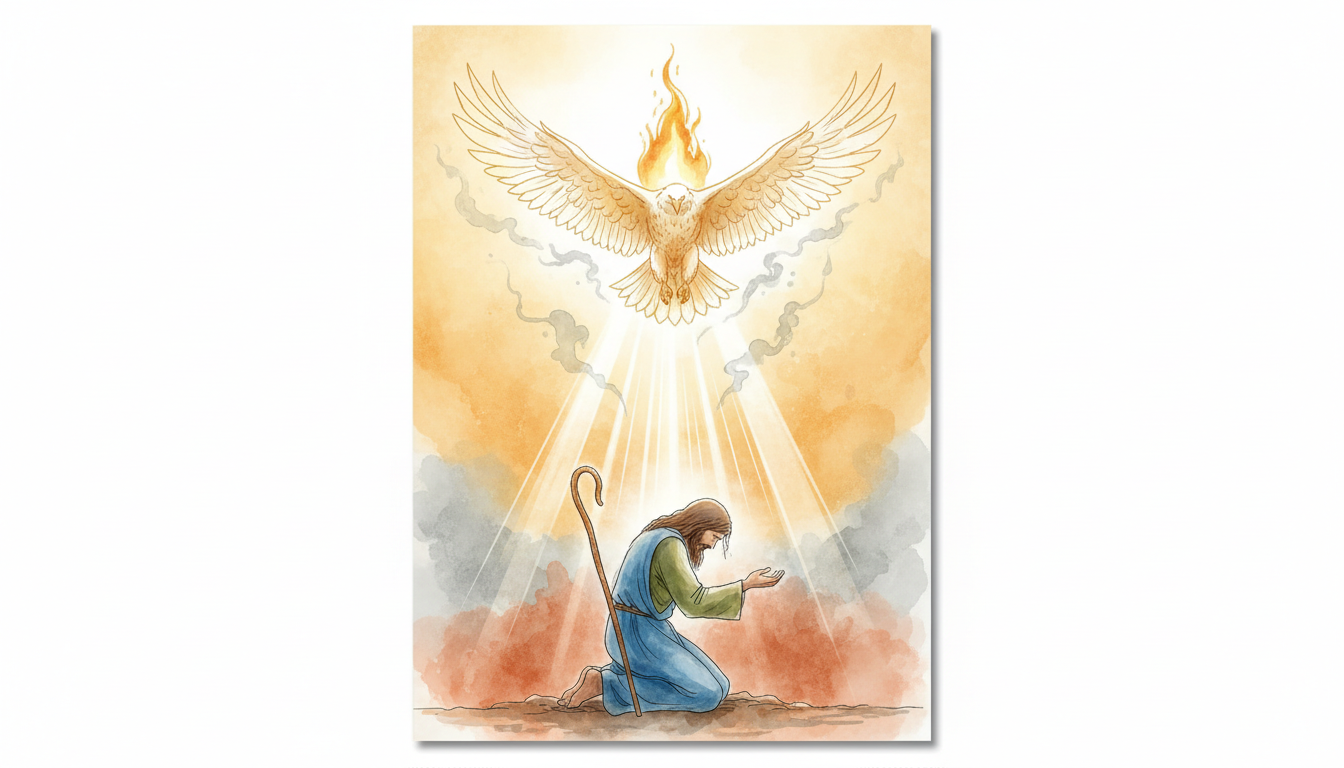
Strength in the Biblical Vision: God as Source, Relational Resilience, and Perseverance Across Life's Dimensions
A five-chapter exploration of biblical strength moving from God as the ultimate source, through the paradox of strength in weakness, to relational resilience, character formation, and finally synthesis into practice. This course recovers the richer original texture of biblical 'strength'—not mere physical power but divine empowerment, moral resolve, covenant faithfulness, and spiritual endurance expressed through faith, community, and perseverance. Each chapter anchors in primary biblical passages while progressively deepening understanding through textual, theological, historical, and relational evidence.
What you'll study
God as the Source: The Lord Is My Strength (Psalm 27:1 and Exodus 15:2)
Psalm 27:1 - 'The Lord is my light and my salvation—whom shall I fear? The Lord is the stronghold of my life—of whom shall I be afraid?' and Exodus 15:2 - 'The Lord is my strength and my defense; he has become my salvation. He is my God, and I will praise him, my father's God, and I will exalt him.'
The Paradox of Strength: Power Made Perfect in Weakness (2 Corinthians 12:7-10)
2 Corinthians 12:7-10 - 'Therefore, in order to keep me from becoming conceited, I was given a thorn in my flesh, a messenger of Satan, to torment me. Three times I pleaded with the Lord to take it away from me. But he said to me, "My grace is sufficient for you, for my power is made perfect in weakness." Therefore I will boast all the more gladly about my weaknesses, so that Christ's power may rest on me. That is why, for Christ's sake, I delight in weaknesses, insults, hardships and persecutions, for when I am weak, then I am strong.'
Strength Through Covenant Faith: From Gideon's Call to David's Trust (Judges 6-7 and 1 Samuel 17)
Judges 6:14 - 'The Lord turned to him and said, "Go in the strength you have and save Israel out of Midian's hand. Am I not sending you?"' and 1 Samuel 17:45-47 - 'David said to the Philistine, "You come against me with sword and spear and javelin, but I come against you in the name of the Lord Almighty, the God of the armies of Israel, whom you have defied. This day the Lord will deliver you into my hands..."'
Strength Renewed in Community and Grace: Philippians 4:13 and Ephesians 6:10-11
Philippians 4:13 - 'I can do all this through him who gives me strength' and Ephesians 6:10-11 - 'Finally, be strong in the Lord and in his mighty power. Put on the full armor of God so that you can take your stand against the devil's schemes.'
Strength for the Weary: Sustained Perseverance and Spiritual Renewal (Isaiah 40:29-31 and 2 Timothy 2:1)
Isaiah 40:29-31 - 'He gives strength to the weary and increases the power of the weak. Even youths grow tired and weary, and young men stumble and fall; but those who hope in the Lord will renew their strength. They will soar on wings like eagles; they will run and not grow weary, they will walk and not be faint' and 2 Timothy 2:1 - 'You then, my son, be strong in the grace that is in Christ Jesus.'
Chapter 1 · Free to read
God as the Source: The Lord Is My Strength (Psalm 27:1 and Exodus 15:2)
Psalm 27:1 - 'The Lord is my light and my salvation—whom shall I fear? The Lord is the stronghold of my life—of whom shall I be afraid?' and Exodus 15:2 - 'The Lord is my strength and my defense; he has become my salvation. He is my God, and I will praise him, my father's God, and I will exalt him.'
The Text
Psalm 27:1 — 'The Lord is my light and my salvation—whom shall I fear? The Lord is the stronghold of my life—of whom shall I be afraid?' Exodus 15:2 — 'The Lord is my strength and my defense; he has become my salvation. He is my God, and I will praise him, my father's God, and I will exalt him.'
Psalm 27:1; Exodus 15:2 (Both passages use first-person possession language ('my light,' 'my strength,' 'my salvation') to express intimate covenant relationship with God as the source of security. In Exodus 15:2, Moses and Israel celebrate their deliverance from Egyptian military power by reframing 'strength' (oz) as God's attribute, not Pharaoh's. In Psalm 27:1, David faces unnamed enemies and declares that God himself—not fortifications, armies, or political alliances—is his protective stronghold (maoz). The parallel structure binds together light, salvation, and strength as unified divine attributes working for the covenant people's benefit.)
Key Terms
- אוֹז · oz (also ōz)
- Strength, might, power—often referring to physical or military force, but redeployed in covenant contexts to mean God's unshakeable power on behalf of His people
- מָעוֹז · maoz (also māʿōz)
- A stronghold, fortress, place of refuge and security—a spatial metaphor for God's protective presence
- יִשְׁעָה · yeshuʿah (also yĕšûʿâh, English 'salvation')
- Deliverance, rescue, victory—God's active intervention to save His people from danger, bondage, or spiritual ruin
- אוֹר · ʾōr (English 'light')
- Light, illumination—both physical light and metaphorically the clarity, guidance, joy, and presence of God
Historical Foundation
Old Testament covenant period through New Testament apostolic age
The ancient Near Eastern world understood strength and security through the lens of divine kingship and covenant loyalty. In Egypt and Mesopotamia, pharaohs and kings invoked their gods as sources of military might and protection. Israel, having been freed from Egyptian bondage, reframed this worldview entirely: strength came not from human military capacity or royal hubris, but from covenant relationship with YHWH, the God who had proven His power at the Red Sea. By David's era (10th century BC), Israel's theology of strength was thoroughly covenantal—the king's confidence rested not in armies but in the Lord's presence and promise. By the 1st century AD, early Christian communities experienced persecution under Rome, making Psalm 27's declaration of fearlessness a revolutionary counter-narrative to imperial power. The apostle Paul would later anchor Christian strength in the paradox of divine grace (2 Corinthians 12:9)—weakness becomes the place where God's power is perfected. This shift from external military power to internal spiritual reliance on God's presence runs like a golden thread from Exodus through the Psalter to the NT epistles.
Cultural World
In ancient Egyptian and Mesopotamian royal ideology, kings were the channels through which divine power flowed to protect the kingdom. Pharaoh invoked Amun-Ra's strength to guarantee military victory; Assyrian kings inscribed their god Ashur as the source of their conquests. Strength (oz in Hebrew, similar to Akkadian emūqu) was a divine attribute channeled through the human king—the king's power derived from the god's power. Israel adopted and inverted this model: the king (even David) was not the channel of divine strength but a recipient and participant in it. More radically, in Israel's covenantal theology, strength belonged not to the king alone but to every covenant member. When David prays 'The Lord is my strength,' he is not claiming royal prerogative—he is invoking the covenant God who had already demonstrated His oz at the Red Sea (Exodus 15:2), humbling Pharaoh's armies. The suzerainty treaty structure (common to Hittite vassal treaties and reflected in Israel's covenant) required the vassal to trust in the overlord's protection; loyalty to the suzerain (God) guaranteed security. Thus 'The Lord is my stronghold' echoes treaty language: David is the vassal confessing his dependence on the Great King. By contrast, the surrounding ANE nations placed confidence in military hardware, chariot forces, and fortified cities. Israel's distinctive move was to ground security in relational trust with God, not in material infrastructure. This is well-attested in the cross-references: Psalm 118:6 ('The Lord is with me; I will not be afraid'), Proverbs 18:10 ('The name of the Lord is a fortified tower'), and 2 Corinthians 12:9 (Paul's later echo: 'My grace is sufficient for you, for my power is made perfect in weakness') show that this covenantal reversal—weakness + God's presence = true strength—became Christianity's central paradox.
What the Evidence Shows
The biblical text presents strength as a fundamentally covenantal and relational attribute of God, not a human capacity to be developed or a material resource to be accumulated. Exodus 15:2, Moses' song at the Red Sea, anchors this theology in historical memory: God demonstrated oz—unstoppable power—by drowning Pharaoh's chariots in the sea. The song explicitly attributes strength, defense, and salvation to the Lord (YHWH), not to Israel's military prowess. Israel possessed no chariots of their own; they had walked on foot through the wilderness. Their 'strength' was wholly dependent on God's covenant promise and His demonstrated power. Centuries later, David in Psalm 27:1 applies this same theology to his personal circumstances: surrounded by enemies, he does not call for reinforcements or fortifications but declares that God himself—as light (guidance), salvation (rescue), and stronghold (refuge)—is his security. The progression from Exodus 15 to Psalm 27 shows that Israel's confidence in God's strength was not static doctrine but living, repeated experience. [1] Matthew Henry's 18th-century commentary emphasizes that David's confidence rested on 'lively faith,' not on visible military advantage: 'If God be for him, who can be against him? If Omnipotence be his guard, he has no cause to fear.' [2] John Gill adds that the Targum (ancient Aramaic paraphrase) understood 'light' as 'the Word of the Lord,' suggesting that Jewish readers from the Second Temple period onward recognized in 'strength' and 'light' pointers to God's active, revealing presence—what later theology would call God's Word or Logos. [3] The cross-references bind this together: Proverbs 18:10 ('The name of the Lord is a fortified tower; the righteous run to it and are safe') spiritualizes the fortress; 1 Peter 3:14 and Romans 8:35 show early Christians invoking Psalm 27's fearlessness despite persecution. [4] By the apostolic era, Paul articulates the paradox explicitly: in 2 Corinthians 12:9, God tells him, 'My power is made perfect in weakness.' This is not a departure from OT theology but its fulfillment—human weakness becomes the place where God's strength is most clearly manifested. The evidence shows that biblical strength is never self-generated, never based on material superiority, and always rooted in covenant loyalty and the experiential reality of God's protective presence. What the evidence reveals is that 'strength' in Scripture is fundamentally a statement about God's character and availability, not about human capacity or resources. To confess 'The Lord is my strength' is to confess dependence, trust, and relational intimacy with God. This reframing—from external military power to internal covenantal reliance—is the signature move of biblical theology and remains the ground of Christian faith in every age.
Scholarly Witness
David's confidence in Psalm 27 is rooted in 'lively faith' in God's Omnipotence, not in visible military advantage. God as 'light,' 'salvation,' and 'strength' are unified divine attributes that eliminate fear when grasped by faith. Henry emphasizes that the ruin of some enemies (Psalm 27:2) is an earnest of complete conquest—the pattern of God's faithfulness proves His future faithfulness.
Gill argues that the Targum's rendering of 'light' as 'the Word of the Lord' reflects ancient Jewish understanding that divine strength and illumination pointed to God's active, self-revealing presence. This supports Gill's thesis that OT believers (like David) had faith in Christ—not Christ's incarnate person, but in the covenant God who would fully reveal Himself as Word/Logos. The light, strength, and salvation of Psalm 27 are attributes of this revealing God.
Jamieson-Fausset-Brown observes that David's confidence in Psalm 27:3-4 ('though an army encamps against me, my heart will not fear') is grounded in his desire for one thing: to dwell in the house of the Lord and gaze upon His beauty. The 'secret of his confidence' is communion with God, not military strategy. They note that Psalm 27:4 reveals the psychological-spiritual mechanism: when the believer's heart is fixed on God's presence and beauty (seeking His face, v. 8), fear of enemies naturally dissolves.
Heiser argues that biblical theology grounds human security not in military power or material fortifications but in relationship with the divine council—the assembled angelic beings who serve YHWH. When David confesses 'The Lord is my stronghold,' he is not just expressing metaphorical faith but claiming membership in a spiritual reality where God's heavenly court acts on behalf of His covenant people. This reframes 'strength' as participation in the divine realm, not human achievement. Heiser connects Exodus 15:2 (God's defeat of Pharaoh's armies) to YHWH's demonstration of power over both human and cosmic forces.
Wright emphasizes that God's strength in Israel's theology is inseparable from God's character as covenant keeper and redeemer. Psalm 27's confidence is not naive optimism but grounded in the historical, repeated demonstration of God's faithfulness—the Exodus paradigm. Wright argues that when believers today confess 'The Lord is my strength,' they are participating in the same covenant memory: claiming that God's past faithfulness (proven at the Red Sea, proven in David's life) guarantees present and future security. This makes strength an eschatological claim as well as a present reality.
Discovery Questions
1.Look at Psalm 27:1-3. What visible military advantage does David have? What is his actual circumstance?
David has no military advantage—enemies surround him. Yet he declares fearlessness. The evidence shows that biblical strength is not about objective military superiority but about subjective trust in God's presence. This inverts ANE royal ideology, which tied confidence to chariots and armies. David's strength comes from an internal relationship with God, not external resources. This is the foundational reframing: strength is covenantal, not martial.
2.Compare Exodus 15:2 (God's strength demonstrated at the Red Sea) with Psalm 27:1 (David's strength in personal crisis). What is the connection?
Exodus 15:2 is the paradigmatic memory: God's oz (strength) drowned Pharaoh's chariots, and Israel was saved without raising a sword. Psalm 27 applies the same covenantal theology to David's individual life. The evidence shows that biblical believers accessed strength by remembering and invoking God's covenant faithfulness. David says 'The Lord has been my helper' (27:9), anchoring his confidence in past demonstrations of God's power. This evidence reveals that strength in Scripture is built on covenant memory—believers look back at what God has done and forward with confidence because God's character is consistent and His covenant is unchanging.
3.What does Matthew Henry's and John Gill's emphasis on 'lively faith' and God as 'the Word' reveal about how strength actually works in the believer's experience?
The evidence from both commentators shows that biblical strength is not intellectual assent to a doctrine but relational trust grounded in experiential knowledge of God. Henry's phrase 'lively faith' (living, active faith) and Gill's emphasis on 'light of grace' (God's felt presence) indicate that strength is activated through communion with God. Psalm 27:4 confirms this: David's longing is to 'dwell in the house of the Lord' and 'gaze upon the beauty of the Lord'—seeking His face, not just reciting theology. The evidence reveals that biblical strength flows from the heart's actual encounter with God's presence, not from abstract belief. This explains why David moves from fear (external circumstance) to confidence (internal reality): the object of his meditation shifts from enemies to God.
4.How does 2 Corinthians 12:9 ('My power is made perfect in weakness') complete or fulfill the OT theology of strength found in Psalm 27 and Exodus 15:2?
The evidence shows that biblical strength theology reaches its culmination in Paul's paradox: God's power is not diminished by human weakness but perfected in it. Exodus 15 (Israel weak, God strong) and Psalm 27 (David outnumbered, God his stronghold) foreshadow this: whenever human capacity fails, God's power becomes maximized. Paul takes the final step: weakness is not an obstacle to strength but the invitation for it. The evidence reveals that biblical 'strength' is antithetical to human self-sufficiency. A believer at the end of human resources is exactly where God's strength operates most clearly. This reframes the entire theology: strength is not achievement but receptivity; not building up but emptying out; not confidence in self but confidence in God's presence precisely when self has nothing to offer. This makes strength available equally to the weak and the powerful, the marginalized and the mighty—because all alike must ultimately depend on God.
Connected Passages
- Exodus 14-15 (the Red Sea crossing and Song of Moses) — The historical foundation of Psalm 27's theology. God's oz (strength) is first demonstrated by drowning Pharaoh's armies. David invokes the same God who proved His power at the Red Sea. Exodus 15:2 is the original proclamation; Psalm 27:1 is the lived application centuries later.
- Psalm 31:1-5 ('Be merciful to me, O Lord, for I am in distress... Be my rock of refuge, a strong fortress') — A parallel psalm using identical covenantal language. David repeats the pattern: enemies press, God is his refuge. Cross-references show consistent theology: strength and salvation are God's attributes, not human achievements. The repetition across multiple psalms shows this was not David's unique opinion but the corporate faith of Israel.
- Proverbs 18:10 ('The name of the Lord is a fortified tower; the righteous run to it and are safe') — Spiritualizes the fortress language. In the ANE, fortified cities provided physical security. Proverbs redefines security as relational—the 'name' (presence and character) of God is the fortress. This shows biblical wisdom reframing human confidence from material defenses to covenantal reliance. Available across all cultures and eras, not dependent on technology or geography.
- Isaiah 40:27-31 ('Do you not know? Have you not heard? The Lord is the everlasting God... He gives strength to the weary') — An exilic-era passage reaffirming the same theology when Israel is powerless in Babylonian exile. The 'strength' (oz) Isaiah promises is not military recovery but spiritual renewal—waiting on God renews strength. Shows continuity: from Exodus (military deliverance) through Davidic era (personal protection) to exile (spiritual sustenance), the source of strength remains God's covenantal presence.
- 1 Peter 3:14-18 ('Do not fear what they fear; do not be frightened... revere Christ as Lord') — NT application of Psalm 27 theology under Roman persecution. Peter tells suffering churches to invoke the same fearlessness David declared. But Peter anchors it explicitly in 'Christ as Lord'—showing that what OT believers accessed through trust in God's covenant, NT believers access through faith in Christ as the incarnate form of God's strength and salvation. Fulfills and personalizes the OT pattern.
- 2 Corinthians 12:1-10 (Paul's thorn and God's sufficiency) — Paul's lived theology of Psalm 27 under apostolic suffering. Facing a 'thorn in the flesh,' Paul asks God to remove it. God's response: 'My grace is sufficient; my power is made perfect in weakness.' This inverts human expectation but completes biblical theology: strength is most clearly manifested when human strength is exhausted. Paul becomes a living embodiment of 'The Lord is my strength' in its deepest form.
- Hebrews 13:6 ('The Lord is my helper; I will not be afraid') — Direct quotation/allusion of Psalm 27:1. The NT writer places Psalm 27's theology in the mouths of persecuted Jewish believers ('let your conversation be without covetousness'—facing economic pressure). This shows that Psalm 27's fearlessness was not theoretical but operative in early Christian communities under actual threat. Strength was lived and tested, not merely confessed.
- Philippians 1:28 ('Do not be frightened by those who oppose you. This is a sign to them that they will be destroyed, but that you will be saved') — Paul applies Psalm 27 theology to conflict with opponents. Fearlessness in facing opposition is evidence of God's salvation. The pattern is consistent: when believers display the fearlessness of Psalm 27, they testify to God's power. What the world sees as weakness (not retaliating, suffering calmly) becomes evidence of strength (participation in God's salvation)—a reversal of values throughout Scripture.
Takeaways
- Biblical 'strength' (oz) is fundamentally covenantal—it refers to God's character and loyalty to His people, not to human military capacity or material resources. From Exodus 15:2 (the Red Sea) through Psalm 27 (David's enemies) to 2 Corinthians 12:9 (Paul's weakness), Scripture consistently teaches that true strength belongs to God and flows to His covenant people through trust and reliance on His presence. When believers confess 'The Lord is my strength,' they are claiming access to God's demonstrated faithfulness, not building confidence on external circumstances.
- The theological move from Exodus (Israel's military weakness, God's power) to Psalm 27 (personal enemies, God's protection) to 2 Corinthians 12 (human weakness, God's perfected power) reveals that biblical strength is scalable and portable. It does not depend on national power, individual capability, or favorable circumstances. The same God who defeated Pharaoh's armies and protected David in the wilderness promises to sustain the persecuted believer under Rome. This makes biblical strength universally available and eternally relevant.
- 'The Lord is my light' (Psalm 27:1) and 'The Lord is my stronghold' reveal that God's strength is not distant or abstract but intimate and present—penetrating fear with guidance (light), enclosing the believer with protection (stronghold). John Gill's note on the Targum's rendering of 'light' as 'the Word of the Lord' suggests that ancient Jewish readers understood 'strength' as pointing to God's self-revealing, active presence. This makes strength experiential, not merely doctrinal: believers encounter God, not just believe about Him.
- The cross-references (Proverbs 18:10 spiritualizing the fortress; 1 Peter 3:14 applying Psalm 27 under persecution; Romans 8:35 celebrating strength through external tribulation) show that biblical strength is counterintuitive by worldly standards. The world equates strength with accumulation (military, economic, social power); Scripture equates strength with dependence on God. This creates a values inversion: the weak believer who trusts God is stronger than the powerful person who trusts self. This remains Christianity's revolutionary claim in every culture.
- Psalm 27:4 ('One thing I have asked of the Lord... to dwell in the house of the Lord all the days of my life, to gaze on the beauty of the Lord') reveals that biblical strength flows from a singular focus: seeking God's presence and beauty. This is not escapism from enemies but reorientation toward the source. When the heart's primary meditation is fixed on God (not on fear, not on circumstances), confidence naturally flows. This points to the mechanism of faith: strength is generated not by will-power but by attention—where the heart looks, strength follows.
- The evidence shows that biblical strength is both personal and corporate, individual and covenantal. David confesses strength for himself (Psalm 27); Israel confessed it together at the Red Sea (Exodus 15); the early church confessed it under persecution (1 Peter, Romans). This suggests that believers access God's strength both in solitary prayer and in communal worship. The 'stronghold' is both the inner sanctuary of the heart and the gathered community of faith. Strength is not isolating but connective—believers strengthen one another by bearing witness to God's faithfulness.
Application
This week, identify one area where you are tempted to generate confidence from external sources: a relationship that feels fragile, a financial situation that feels uncertain, a conflict where you lack advantage, or a fear that your weakness disqualifies you. Write down what 'The Lord is my strength' would mean concretely in that situation. Then, following David's pattern in Psalm 27:4, identify one spiritual discipline that would fix your heart on God's presence and beauty in that circumstance (prayer, Scripture meditation, worship, community with other believers who remind you of God's faithfulness). Practice that discipline for three days, and notice whether your confidence shifts. Finally, reflect: Where is the Spirit inviting you to trust God's strength instead of your own capacity—and what would trusting Him actually change about how you live?
Continue the course — 4 more chapters
The Paradox of Strength: Power Made Perfect in Weakness (2 Corinthians 12:7-10)
2 Corinthians 12:7-10 - 'Therefore, in order to keep me from becoming conceited, I was given a thorn in my flesh, a messenger of Satan, to torment me. Three times I pleaded with the Lord to take it away from me. But he said to me, "My grace is sufficient for you, for my power is made perfect in weakness." Therefore I will boast all the more gladly about my weaknesses, so that Christ's power may rest on me. That is why, for Christ's sake, I delight in weaknesses, insults, hardships and persecutions, for when I am weak, then I am strong.'
How does Scripture reveal that human weakness becomes the arena where divine strength operates most authentically, and what makes this counterintuitive truth essential to biblical understanding?
Strength Through Covenant Faith: From Gideon's Call to David's Trust (Judges 6-7 and 1 Samuel 17)
Judges 6:14 - 'The Lord turned to him and said, "Go in the strength you have and save Israel out of Midian's hand. Am I not sending you?"' and 1 Samuel 17:45-47 - 'David said to the Philistine, "You come against me with sword and spear and javelin, but I come against you in the name of the Lord Almighty, the God of the armies of Israel, whom you have defied. This day the Lord will deliver you into my hands..."'
What do these narratives reveal about how strength operates relationally—through trust in God's covenant presence—rather than through human might, military advantage, or individual prowess?
Strength Renewed in Community and Grace: Philippians 4:13 and Ephesians 6:10-11
Philippians 4:13 - 'I can do all this through him who gives me strength' and Ephesians 6:10-11 - 'Finally, be strong in the Lord and in his mighty power. Put on the full armor of God so that you can take your stand against the devil's schemes.'
How does the Pauline vision integrate individual empowerment with corporate belonging, spiritual discipline, and the grace that operates through relationships within the body of Christ?
Strength for the Weary: Sustained Perseverance and Spiritual Renewal (Isaiah 40:29-31 and 2 Timothy 2:1)
Isaiah 40:29-31 - 'He gives strength to the weary and increases the power of the weak. Even youths grow tired and weary, and young men stumble and fall; but those who hope in the Lord will renew their strength. They will soar on wings like eagles; they will run and not grow weary, they will walk and not be faint' and 2 Timothy 2:1 - 'You then, my son, be strong in the grace that is in Christ Jesus.'
What does Scripture teach about strength as an ongoing, relational practice sustained by hope in God's covenant faithfulness—a strength that endures, renews, and transforms across life's seasons?
No credit card required
Sources Used
Every insight traces to a named source. 0 AI-generated interpretations.
Related courses
What Does Scripture Teach About Money? A Covenantal Vision Beyond Personal Virtue
This six-chapter course recovers the Bible's richest teaching on money as a covenantal and structural force, not merely a tool for individual moral performance. Beginning with the foundational text that distinguishes the love of money from money itself, the course traces how Hebrew economic law embedded justice into community structures, how Jesus named money as a rival power (mammon), and how apostolic practice revealed economics as a cosmic realignment. Each chapter starts with primary Scripture and shows how cultural, historical, and theological context deepens—not replaces—what the text already says. Learners will discover that biblical money teaching is far more concerned with concrete justice NOW in covenant community than with afterlife reward, and that wealth functions as a theological force requiring both personal AND corporate transformation. This is enrichment and recovery: the biblical text proves richer than inherited tradition suggested.
6 chapters
Bible Verses About Peace: Understanding Shalom, Eirene, and Christ's Redemptive Peace
This course explores biblical passages about peace through a progressive journey from Old Testament foundations to New Testament fulfillment. Students will discover the rich theological depth of peace in Scripture, distinguishing between Hebrew shalom and Greek eirene, understanding how Christ's Atonement establishes peace with God, and learning how believers experience the supernatural peace of God through the Holy Spirit. Each chapter anchors learning in a key biblical text, enriched by historical, linguistic, and theological insight.
5 chapters
Bible Verses About Hope: A Canonical Study of Biblical Hope from Promise to Fulfillment
This five-chapter course traces the biblical theology of hope through primary texts and their historical contexts, from Old Testament expressions of trust in exile to New Testament proclamation of hope anchored in Christ's resurrection. Each chapter begins with a foundational passage and explores how linguistic, theological, and historical evidence deepens our understanding of what the Bible means by hope—not optimism or wishful thinking, but confident trust in God's character and promises despite present circumstances.
5 chapters
What Does the Bible Reveal About Anger as a Relational Response?
A five-chapter biblical exploration of anger as neither inherently sinful nor a mere emotion to suppress, but a morally complex relational response. This course traces how Scripture distinguishes between destructive and righteous anger, reveals anger and love coexisting in God's character, and shows how Christ's incarnation reframes human anger within redemptive justice. Learners will discover that the biblical text on anger is far richer than common tradition suggests—anger itself is morally neutral; the object, motive, and expression determine its ethical weight.
5 chapters
What Does the Bible Say About Tithing? A Covenant-Based System Revealed
This course traces the biblical teaching on tithes from Abraham through the early church, uncovering how tithing functioned not as a simple percentage but as a multifaceted covenant practice tied to priestly support, festival celebration, and care for the poor. We discover that the original text reveals something richer than the simplified 10% rule: a system rooted in relationship with God and community care. The course culminates in understanding how Jesus and the apostles transformed this practice into grace-motivated voluntary generosity, enriching rather than abandoning the principle of faithful giving.
5 chapters
What Does the Bible Say About the Holy Spirit?
A six-chapter course exploring the identity, roles, and work of the Holy Spirit across Scripture. Beginning with the Spirit's presence at creation and moving through Old Testament promises, Jesus's teaching, Pentecost, and the apostolic letters, this course builds a comprehensive biblical understanding of the Holy Spirit's personhood, functions in salvation and sanctification, and gifting of the church. Each chapter is anchored in a key passage and progresses from textual observation through historical context to theological synthesis, designed to deepen the learner's wonder at Scripture's revelation.
6 chapters
Create your own Bible studies — free.
Ask any question. Get evidence from named scholars and curated datasets in minutes.
Get Started Free